
Modern Logistics Buildings Need More Than Basic Door Openings
The growth of logistics facilities, distribution centers, and warehouse projects is reshaping the way commercial and industrial doors are specified. For many building owners and contractors, doors are no longer treated as simple access points. They are now part of the building’s productivity, energy performance, safety management, and long-term operating cost.
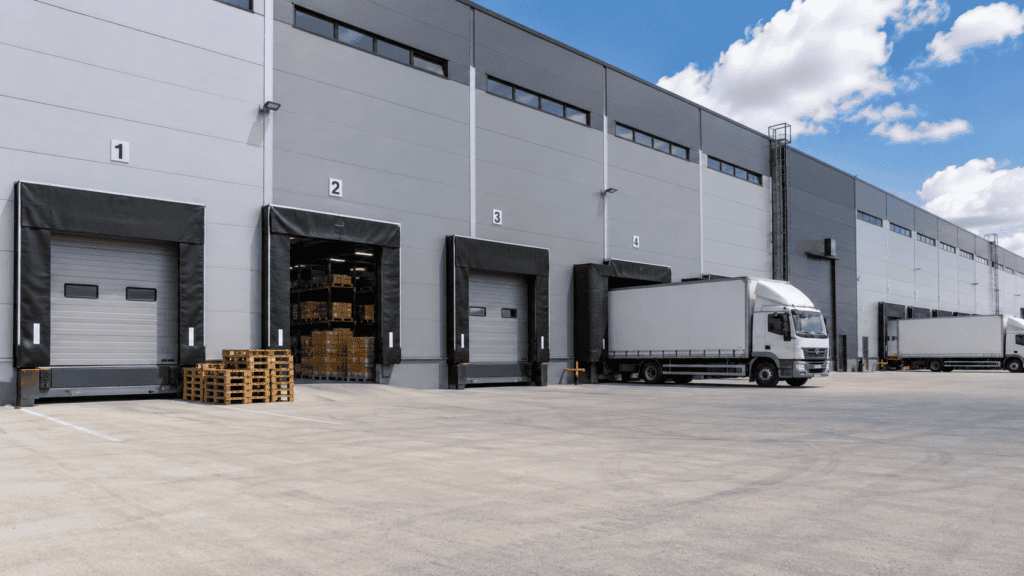
Recent warehouse and logistics developments in markets such as North America show a continued need for large-format access systems that can support frequent traffic, truck loading, forklift movement, and controlled indoor environments. This trend creates stronger demand for industrial sectional doors, high-speed doors, loading dock doors, and insulated commercial garage doors.
For B2B buyers, the key question is no longer only “Which door fits the opening?” A more practical question is: “Which door helps the facility operate efficiently every day?”


Why Industrial Sectional Doors Are Important in Logistics Facilities
Industrial sectional doors are widely used in warehouses, manufacturing plants, logistics centers, and commercial buildings because they combine durability, space efficiency, and stable performance.
Unlike traditional swing doors or basic rolling doors, sectional overhead doors open vertically and are stored under the ceiling. This design helps facilities save floor space near loading areas, improve vehicle access, and maintain a cleaner traffic flow around the building.
For logistics applications, industrial sectional doors are often selected for:
- Loading dock areas
- Internal warehouse partitions
- Vehicle maintenance zones
- Distribution center entrances
- Cold storage support areas
- Manufacturing and assembly facilities
A well-specified sectional door can help reduce downtime, improve safety, and support smoother movement between indoor and outdoor areas.
Warehouse Throughput Is Becoming a Door Selection Factor
In modern logistics operations, every delay at the loading area can affect delivery schedules. This is why door speed, opening frequency, safety devices, and sealing performance have become important purchasing factors.
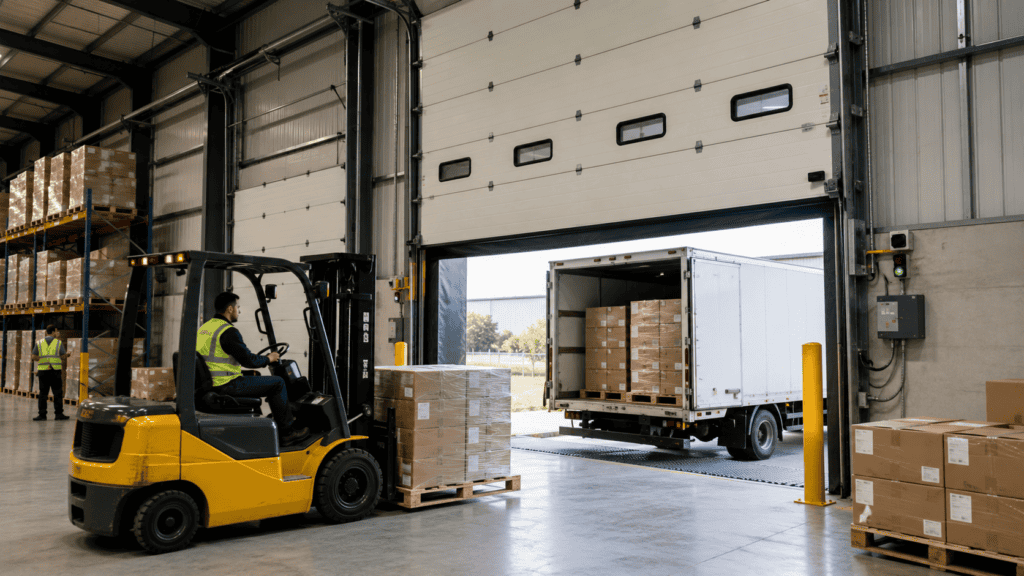
For example, a high-traffic warehouse may require fast-opening doors in areas where forklifts move repeatedly throughout the day. A cold storage or temperature-sensitive facility may need insulated sectional doors or high-speed doors to reduce air exchange. A distribution center with multiple truck bays may need reliable loading dock doors that can handle continuous daily operation.
In these scenarios, the door is directly connected to warehouse throughput. A slow, poorly sealed, or frequently damaged door can increase energy loss, delay goods movement, and create maintenance problems.
Energy Efficiency Is Also Driving Demand for Better Door Systems
Energy performance is becoming more important in both new construction and facility upgrades. Warehouses, cold rooms, and industrial buildings often have large door openings, which means poor door selection can lead to significant heat loss, air leakage, or cooling loss.
Insulated industrial sectional doors can help improve thermal performance by reducing unwanted heat transfer. When combined with proper seals, panels, tracks, and automatic controls, they can support better indoor temperature management.
This is especially valuable for:
- Cold chain warehouses
- Food and beverage facilities
- Pharmaceutical logistics centers
- Climate-controlled storage buildings
- Commercial buildings in hot or cold regions
For buyers comparing commercial garage doors, the door’s insulation value, sealing structure, panel thickness, and long-term durability should be considered alongside the purchase price.


Safety and Maintenance Are Key Concerns for Large Facilities
Industrial door systems in logistics and warehouse buildings must operate safely under frequent use. For project owners, facility managers, and contractors, safety features are not optional details. They are part of daily risk control.
Common safety and reliability considerations include:
- Anti-fall protection
- Spring or cable safety devices
- Photoelectric sensors
- Bottom safety edges
- 耐風性
- Manual release options
- Stable motor and control systems
- Easy access for inspection and maintenance
Large facilities may also require scheduled inspection and maintenance for overhead doors, high-speed doors, dock equipment, and roll-up doors. This shows that industrial doors are long-term assets rather than one-time purchases.
A reliable supplier should be able to support not only product delivery, but also technical drawings, configuration advice, installation guidance, and after-sales service.
What B2B Buyers Should Consider Before Choosing Industrial Doors
When selecting doors for a logistics facility or warehouse project, buyers should evaluate the actual working environment instead of choosing only by size or price.
Important questions include:
- How many times will the door open and close each day?
- Is the facility temperature-controlled?
- Will forklifts, trucks, or heavy equipment pass through the opening?
- Is wind resistance required?
- Does the project need insulated door panels?
- Are there safety standards or local building requirements?
- How easy is the door to maintain after installation?
- Can the supplier provide customized sizes and project support?
These questions help buyers choose the right solution between industrial sectional doors, high-speed doors, loading dock doors, and insulated commercial garage doors.


SEPPES Garage Door Solutions for Logistics and Industrial Projects
SEPPES Garage provides door solutions for commercial, industrial, and logistics applications. For warehouse and distribution center projects, the main product options include:
- 産業用セクショナルドア for durable overhead access
- Insulated Sectional Garage Doors for improved thermal performance
- High-Speed Doors for frequent traffic and workflow efficiency
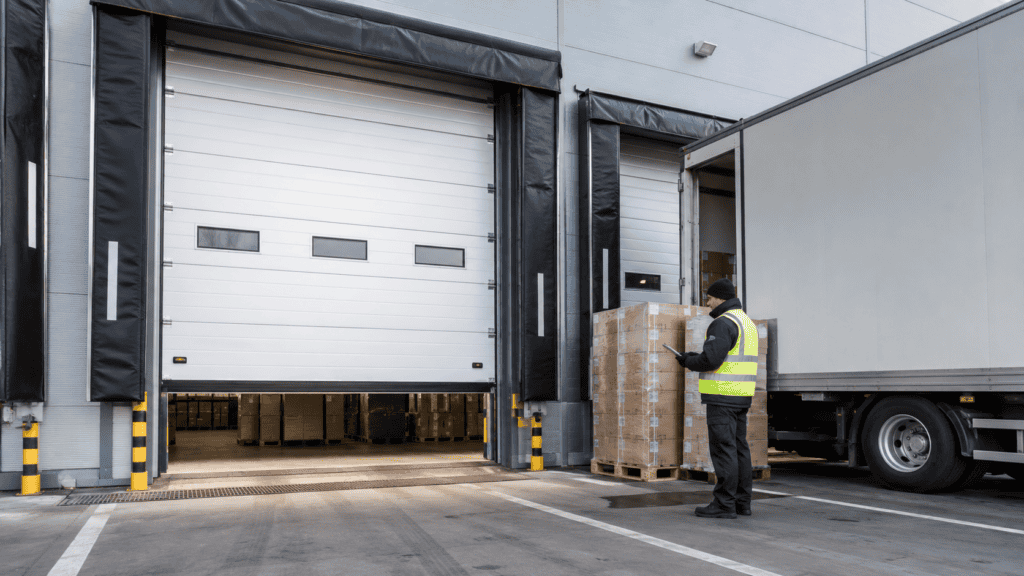
- Loading Dock Doors for truck loading and unloading areas
- Commercial Garage Doors for factories, service buildings, and industrial facilities
With customizable sizes, panel options, control systems, and project-oriented technical support, SEPPES helps global buyers select suitable door systems for different building types and operating conditions.
結論
The expansion of logistics facilities is increasing demand for industrial door systems that can support speed, safety, energy efficiency, and long-term reliability. For warehouses and distribution centers, the right door system can improve daily operations and reduce hidden costs over time.
For B2B buyers, contractors, and distributors, industrial sectional doors are no longer just building components. They are an important part of modern warehouse performance.
よくある質問
物流施設では一般的にどのようなタイプのドアが使用されていますか?
産業用セクショナルドアは、垂直に開閉し、省スペースであり、トラックやフォークリフト、倉庫作業に対して信頼性の高いアクセスを提供するため、物流施設で一般的に使用されています。.
断熱セクショナルドアは倉庫に適していますか?
はい。断熱セクショナルドアは、温度管理の向上、エネルギー損失の低減、または室内の快適性向上が求められる倉庫に適しています。.
倉庫はいつ高速ドアを使用すべきですか?
高速ドアは、フォークリフトの頻繁な移動があるエリア、温度管理が必要なゾーン、クリーンエリア、または迅速なアクセスが作業効率を向上させる場所に適しています。.
商業用ガレージドアを選ぶ際、購入者は何を考慮すべきですか?
購入者は、ドアのサイズ、開閉頻度、断熱性、安全機能、耐風性、制御システム、メンテナンスの必要性、およびサプライヤーのプロジェクトサポートを考慮すべきである。.
工業用セクショナルドアはカスタマイズ可能ですか?
はい。産業用セクショナルドアは通常、サイズ、パネルタイプ、断熱材、窓のデザイン、レールシステム、モーター構成、安全装置によってカスタマイズが可能です。.
Source References
RE-NJ: [FRP Holdings, DWS deliver 171,000 sq. ft. logistics center at Hamilton]
New York YIMBY: [170K-Square-Foot Logistics Center Completes Construction in Hamilton, New Jersey]
East Coast Storage Equipment: [Designing Warehouse Staging Areas for Maximum Throughput]