
Modern warehouse projects are no longer evaluated only by location and floor area. For logistics operators, distributors, manufacturers and real estate developers, the quality of the loading area has become a direct part of operational performance.
Recent industry updates from North America show a clear trend: modern industrial buildings are expected to offer higher clear heights, more efficient loading dock doors, stronger automation readiness, better energy performance and improved resilience against severe weather.
For commercial garage door buyers and industrial door distributors, this shift matters. Door systems are becoming part of the value of the building itself.
Loading Capacity Is Becoming a Core Warehouse Specification
A July 2026 industry analysis from Link Logistics described a continuing “flight to quality” in industrial real estate. Tenants are moving toward modern warehouse spaces with better clear heights, stronger power capacity, advanced fire systems, trailer parking and more functional loading areas.
The article noted that older buildings with limited dock doors and lower clear heights are becoming less attractive for companies running modern distribution operations.
This is an important signal for the garage door and industrial door market. A warehouse with too few dock positions, slow door operation or poorly sealed openings can create delays across the entire supply chain. For high-volume logistics users, door performance affects truck turnaround time, indoor temperature control, worker safety and maintenance cost.
That is why loading dock doors should be considered early in the planning stage, not treated as a basic accessory at the end of construction.


Air Cargo Facilities Show the Demand for More Door Openings
The same trend can be seen in airport logistics. Realterm and the Susquehanna Area Regional Airport Authority announced a new cargo facility at Harrisburg International Airport, designed to provide up to 105,000 square feet of LEED-certified air cargo space.
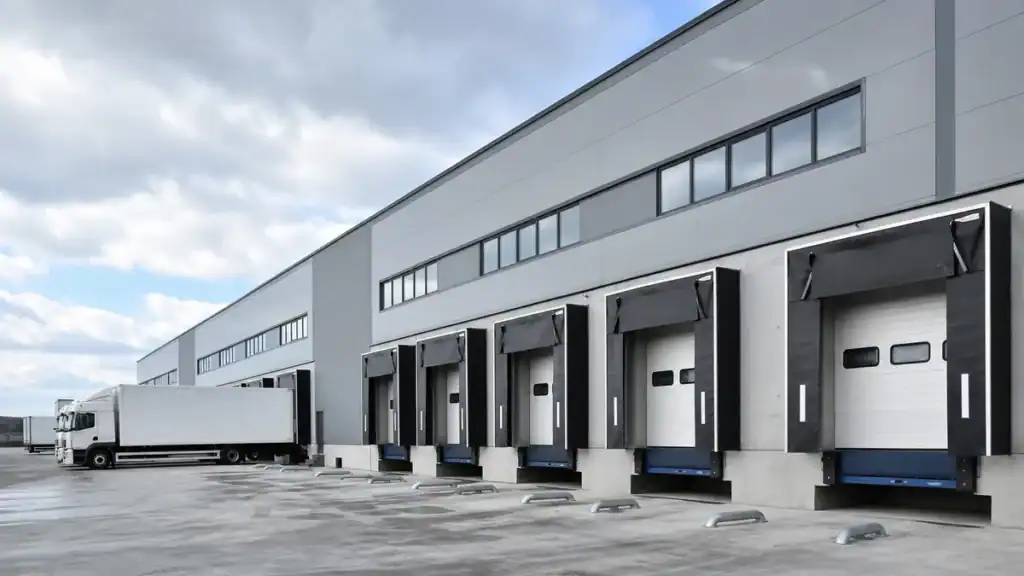
The planned facility includes 40 landside loading dock doors and 8 airside drive-in doors. For air cargo operators, this type of door configuration supports fast movement between trucks, aircraft support zones and warehouse handling areas.
This shows how important door planning has become in logistics infrastructure. In facilities where cargo moves quickly, the right mix of sectional industrial doors, dock shelters, dock levelers and high-speed doors can reduce bottlenecks and protect goods from weather exposure.
For B2B buyers, the lesson is simple: door quantity is only one part of the decision. The door system also needs to match traffic frequency, vehicle type, building layout, insulation requirements and safety standards.
Industrial Real Estate Values Reflect Door Functionality
Door configuration is also appearing in industrial property financing and leasing discussions. Long Island Business News reported that a Bay Shore industrial property secured $46.33 million in refinancing. The property features 40-foot clear heights, 24 dock doors and 4 drive-in bays.
These details are not decorative. They are part of what makes the building useful to modern tenants.
For warehouse owners and developers, upgrading outdated overhead doors or adding better dock equipment can improve the practical competitiveness of an industrial asset. For tenants, a well-designed loading area can reduce hidden operating costs that may not appear in the headline rent.
This is where commercial garage doors and industrial sectional doors become strategic building components. Strong insulation, reliable hardware, safe operation and good sealing can support daily efficiency over many years.


Maintenance and Automation Are Now Part of Procurement
Public-sector purchasing also points to a broader trend. The City of Fairfax, Virginia listed a solicitation for preventive maintenance, inspection, repair, replacement and installation services for overhead and automatic door systems at multiple city facilities.
This reflects a reality many facility managers already know: automatic door systems need long-term service planning.
A door that fails during peak operation can stop deliveries, expose goods to weather, create safety risks and increase emergency repair costs. For warehouses, municipal facilities, fire stations, parking areas and industrial buildings, buyers should evaluate not only the purchase price, but also the expected maintenance cycle, spare parts availability and opener reliability.
For distributors and contractors, this creates an opportunity to sell complete door solutions instead of only selling the door panel.
Weather Resilience and Energy Efficiency Are Gaining Attention
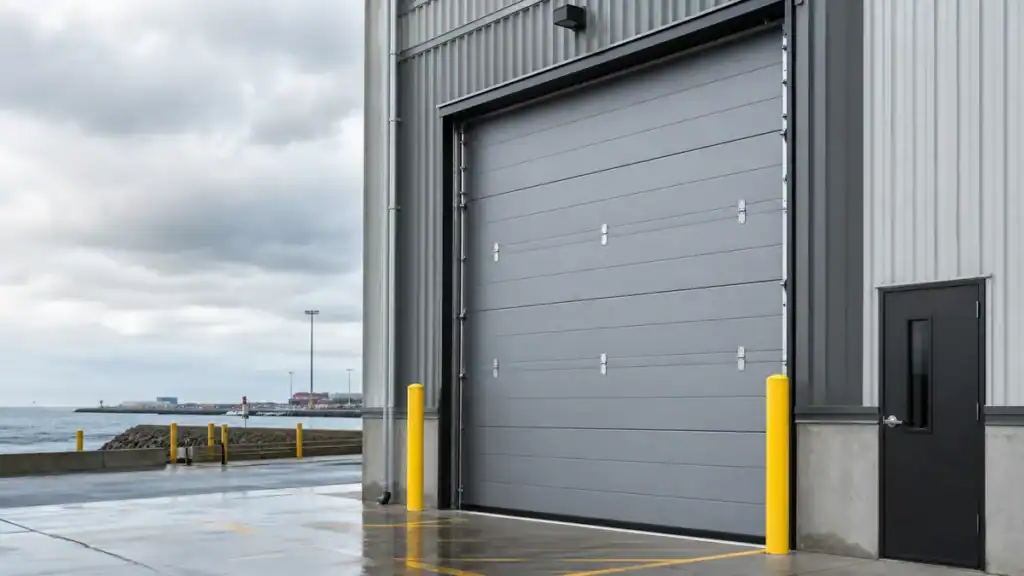
Severe weather is another reason industrial door specifications are changing. Rytec recently highlighted the role of hurricane-rated high-performance doors in protecting commercial buildings from strong wind, pressure changes, rain and flying debris.
At the same time, energy codes are pushing building owners to pay closer attention to insulation and air leakage. The U.S. Department of Energy has stated that the 2024 International Energy Conservation Code improves residential building energy efficiency, while industry guidance from DASMA and door suppliers continues to explain how garage doors may become relevant when they are part of a conditioned building envelope.
For industrial and commercial buyers, the direction is clear: doors must do more than open and close. They need to help protect the building, separate indoor and outdoor environments, support energy performance and keep operations moving.
What Buyers Should Consider Before Choosing Warehouse Doors
Before selecting loading dock doors or commercial garage doors, buyers should review the full operating environment.
Key questions include:
- How many trucks will use the loading area each day?
- Are fast opening and closing speeds required?
- Does the building need insulated sectional doors?
- Will the doors connect with dock levelers, shelters or automation controls?
- Are there local wind load, fire safety or energy code requirements?
- What maintenance support is available after installation?
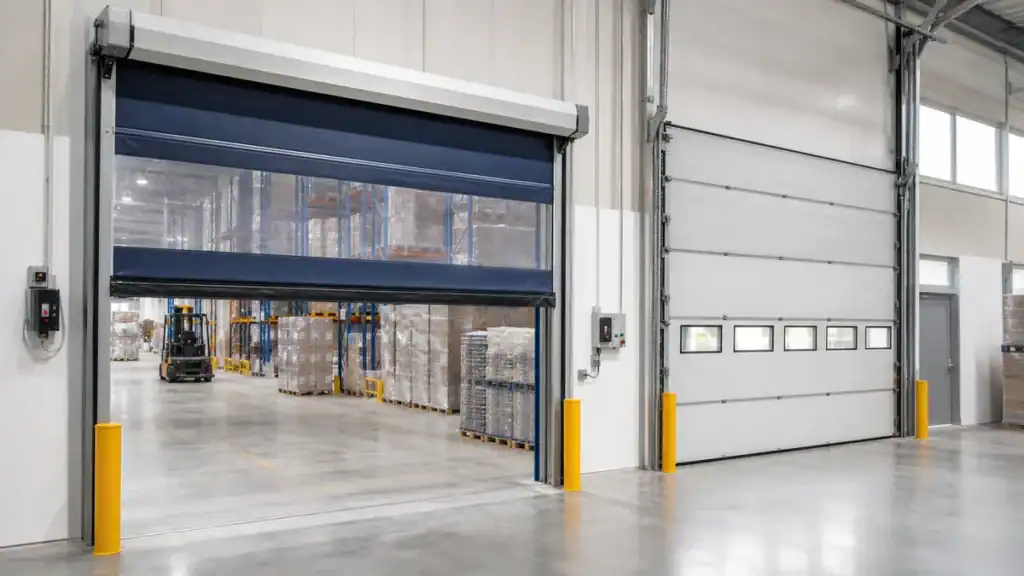
For many projects, the best solution is not one product. A modern warehouse may need industrial sectional doors for loading docks, high-speed doors for internal traffic, insulated doors for temperature-sensitive areas and automatic openers for controlled access.


SEPPES Perspective
各種物流チャネルや清潔な場所において、耐風性のある積層ドアは高い性能要件を満たすことができます。また、迅速な開閉が可能であり、工場の省エネと作業負荷率の向上に貢献します。頻繁な出入りが必要な出荷口には、折りたたみ式の昇降方式と複数の内蔵水平耐風レバーを採用し、風圧をドア全体に均等に分散させることができます。その耐風性能は通常のシャッター式高速ドアよりもはるかに高く、物流チャネルや大規模な開口部への設置に特に適しています。 SEPPES(セップス) Garage, the global market trend is moving toward higher-performance door systems for logistics, warehousing, manufacturing and commercial buildings.
SEPPES industrial sectional doors, commercial garage doors, high-speed doors and dock solutions are designed for B2B buyers who need reliable operation, clean appearance, safety features and project-level support. As modern warehouses continue to raise expectations, door systems will play a larger role in building efficiency and long-term value.
よくある質問
Why are loading dock doors important for modern warehouses?
Loading dock doors affect truck flow, energy loss, weather protection, worker safety and daily operating efficiency.
What type of door is best for warehouse loading areas?
Industrial sectional doors are commonly used for loading docks because they offer durability, sealing performance and compatibility with dock equipment.
When should a warehouse use high-speed doors?
High-speed doors are useful in areas with frequent traffic, temperature control needs or strict separation between different working zones.
Authoritative Sources
Link Logistics: Flight to Quality in Industrial Real Estate
Airport Improvement: Realterm and SARAA Harrisburg Cargo Facility
Long Island Business News: Bay Shore Industrial Asset Refinancing