Türen für Lebensmittel- und Getränkebetriebe werden zu einem immer wichtigeren Spezifikationsthema für Fabriken, Verarbeitungsbetriebe, Kühlhäuser, Distributionszentren und Lagererweiterungsprojekte.
Das Signal kommt nicht von einer einzelnen Herstellerankündigung für Türen. Es kommt gleichzeitig aus mehreren Teilen des Industriemarktes. Ein Bericht von Industrial SalesLeads vom 14. Juli 2026 besagte, dass die geplanten nordamerikanischen Projekte im Lebensmittel- und Getränkebereich im Juni mit 59 identifizierten neuen Projekten wieder anstiegen. Derselbe Bericht zeigte, dass ein hoher Anteil der Projektmanager Laderampenausrüstung, maschinelle Anlagen, Brandschutzausrüstung sowie Sicherheits-/Netzwerkausrüstung beschaffte.
Gleichzeitig weisen Leitfäden zur Klimatisierung von Lagern weiterhin auf dieselbe praktische Herausforderung hin: Ladebuchten, Andocktore, Fahrzeugbewegungen und offene Eingänge können die Energieeffizienz und Temperaturkonstanz erschweren. Kommerzielle Türdienstleister erweitern zudem ihre regionale Abdeckung mit einem stärkeren Fokus auf vorbeugende Wartung, Notreparaturen, Laderampenausrüstung, Automatiktüren und die Betriebszeit von Industrietoren.
Für B2B-Käufer, Händler, Auftragnehmer und Anlagenbetreiber im Ausland ist die Schlussfolgerung klar: Der Kauf von Türen für die Lebensmittel- und Getränkeindustrie sollte als Entscheidung für ein vollständiges Betriebssystem betrachtet werden, nicht als einfacher Kauf einer Türplatte.
Wichtige Erkenntnisse
- Die Projektaktivität im Lebensmittel- und Getränkebereich erzeugt eine praktische Nachfrage nach Laderampenausrüstung, Lagertoren, Sicherheitssystemen und wartungsfreundlichen Zugangslösungen.
- Käufer sollten Außenladetore, Andockvorzelte, Laderampenbrücken, Schnelllauftore, Sicherheitseinrichtungen und Steuerungen als ein verbundenes Paket spezifizieren.
- Temperaturempfindliche Einrichtungen sollten besonders auf Türgeschwindigkeit, Isolierung, Abdichtung, Luftinfiltration und das Zusammenspiel des Türsystems mit der HLK- oder Kälteplanung achten.
- Vorbeugende Wartung wird zunehmend Teil der Kaufentscheidung, da Lebensmittel- und Getränkebetriebe sich wiederholte Ausfallzeiten an Wareneingang, Versand oder internen Verkehrspunkten nicht leisten können.
- SEPPES-Produkte können im Bereich Industrie-Sektionaltore, Schnelllauftore, Andockvorzelte, Laderampenbrücken, Torantriebe und projektbezogenem technischem Support positioniert werden.
Warum die Projektaktivität im Lebensmittel- und Getränkebereich von Bedeutung ist
Lebensmittel- und Getränkebetriebe sind keine gewöhnlichen Lagerhäuser. Sie kombinieren oft Verarbeitung, Verpackung, Kühllagerung, Trockenlagerung, Distribution, Qualitätskontrolle, Hygiene und Mitarbeiterverkehr am selben Standort. Eine Türöffnung kann einen LKW von einer Ladebucht, einen Kühlraum von einem Umgebungsbereich, eine Produktionszone von einem Lager oder eine Gabelstaplerroute von einem Fußgängerbereich trennen.
Deshalb sind aktuelle Projektdaten wichtig. Der am 14. Juli 2026 veröffentlichte Bericht von Industrial SalesLeads besagte, dass sein Forschungsteam im Juni 2026 59 neue Lebensmittel- und Getränkeprojekte identifizierte, darunter Verarbeitungsbetriebe, Distributions- und Industrielagerprojekte, Neubauten, Erweiterungen sowie Renovierungs- oder Geräte-Upgrade-Arbeiten. Er berichtete auch von einer starken Gerätenachfrage in den Bereichen Materialfluss, HLK, Fördertechnik, Laderampenausrüstung, Brandschutz, Sicherheit und Steuerungssysteme.
Das bedeutet nicht, dass jedes Projekt dasselbe Türpaket kauft. Es bedeutet, dass Lebensmittel- und Getränkeprojekte aktiv in die Anlageninfrastruktur investieren. Für Türkäufer ergibt sich daraus eine bessere Frage:
Welche Tür- und Andocksysteme helfen der Anlage, Produkte sicher zu empfangen, zu lagern, zu verarbeiten, zu bewegen und zu versenden, ohne Energie zu verschwenden oder Engpässe zu verursachen?
Für SEPPES Garage-Kunden ist diese Frage nützlich, da sie die Türwahl mit dem tatsächlichen Anlagenbetrieb verbindet. Die größte Chance besteht nicht darin, eine einzelne Tür isoliert zu verkaufen. Es geht darum, Käufern zu helfen, Industrietore und Ladesysteme auf die Arbeitsabläufe in der Lebensmittel- und Getränkeindustrie abzustimmen.
Das Türpaket beginnt am Wareneingang und Versand
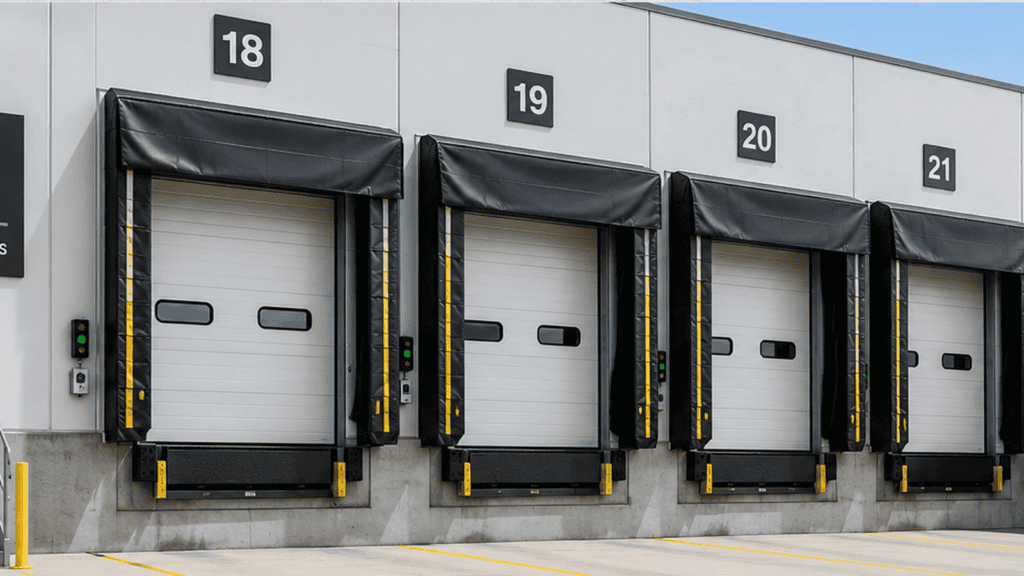
In der Lebensmittel- und Getränkedistribution ist die Laderampe oft der belebteste und am stärksten exponierte Teil des Gebäudes. LKWs kommen mit unterschiedlichen Aufbauhöhen an. Gabelstapler bewegen sich wiederholt durch dieselben Öffnungen. Betreiber müssen die Zeitpläne einhalten und gleichzeitig Witterungseinflüsse, Staub, Insekten und unerwünschten Luftaustausch begrenzen.
Ein praktisches Türpaket für Wareneingang und Versand kann Folgendes umfassen:
- Isolierte Industrie-Sektionaltore für äußere Ladeöffnungen
- Laderampenbrücken zur Überbrückung des Höhenunterschieds zwischen Gebäudeboden und LKW-Aufbau
- Andockvorzelte oder Andockdichtungen zur Verringerung der Spalte um das Fahrzeug
- Fahrzeugrückhaltesysteme, Radführungen oder Verkehrsleitsysteme, falls erforderlich
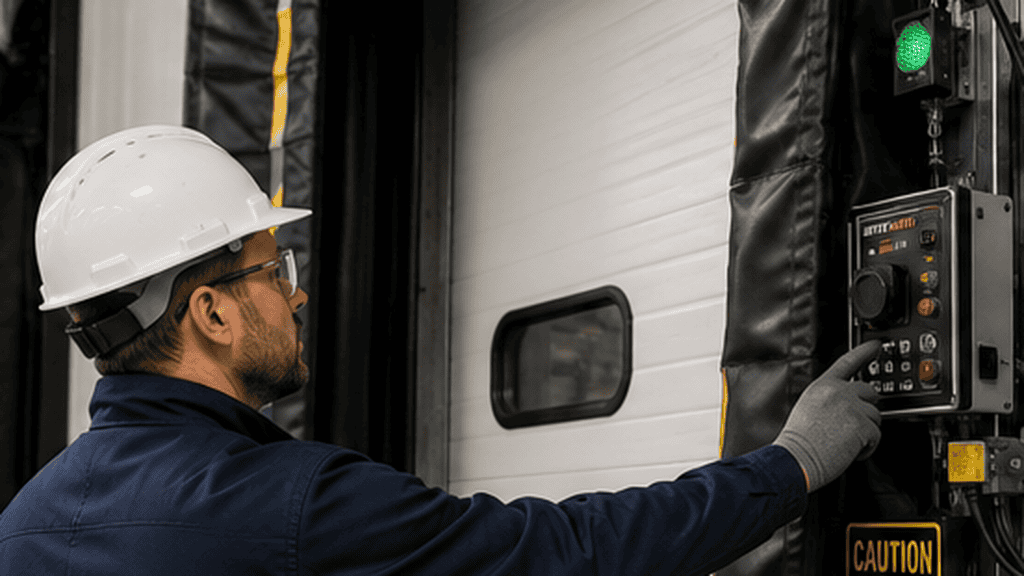
- Sicherheitssensoren, Warnleuchten und klare Bedienelemente
- Auf Öffnungsgröße, Zyklen, Spannung und örtliche Einsatzbedingungen abgestimmte Torantriebe
- Planung von Ersatzteilen und Service vor Inbetriebnahme der Anlage
Für Käufer ist der entscheidende Punkt, dass die Laderampe nicht stückweise ohne Systemlogik spezifiziert werden sollte. Ein starkes Rampenpaket sollte Fahrzeugen helfen, sich mit dem Gebäude zu verbinden, Türen zuverlässig schließen lassen, die Exposition an der Öffnung reduzieren und die tägliche Ladearbeit berechenbarer machen.
Klimatisierung verändert die Türspezifikation
Die Temperaturkontrolle ist einer der Gründe, warum Türen in Lebensmittel- und Getränkebetrieben mehr Aufmerksamkeit verdienen als Standard-Lageröffnungen.
Der HLK-Leitfaden für Lagerhäuser der Aircon Group vom 14. Juli 2026 hebt mehrere Herausforderungen hervor, die Industrietorkäufern vertraut sind: Hochregalbauweise, mehrere Ladebuchten und Andocktore, Fahrzeugbewegungen, offene Eingänge, solare Wärmegewinne und Luftinfiltration. Der Artikel konzentriert sich auf HLK, nicht auf Türherstellung, aber die Auswirkung auf die Türspezifikation ist direkt. Ein Lager kann die Energieeffizienz nicht allein durch Kühl- oder Heizgeräte steuern, wenn Hauptöffnungen schlecht abgedichtet sind, zu lange offen stehen oder schwer zu kontrollieren sind.
Für Lebensmittel- und Getränkebetriebe ist dies in mehreren häufigen Szenarien von Bedeutung:
- Umgebungslager, die stabilere Arbeitstemperaturen benötigen
- Kühl- oder Kühlbereiche, die Temperaturanstiege begrenzen müssen
- Verpackungsbereiche, in denen Luftfeuchtigkeit und Komfort die Arbeitsqualität beeinflussen
- Produktionszonen, die eine Trennung vom Ladeverkehr benötigen
- Distributionszentren, die mit häufigen Türzyklen arbeiten
Die Türwahl kann die Klimatisierungsziele auf verschiedene Weise unterstützen. Isolierte Sektionaltore helfen, die Wärmeübertragung an äußeren Ladeöffnungen zu reduzieren. Andockvorzelte und -dichtungen helfen, Spalte um LKWs zu begrenzen. Schnelllauftore reduzieren die Zeit, die eine Öffnung bei häufigem internen Verkehr exponiert bleibt. Gut geplante Steuerungen und Sensoren reduzieren unnötige Öffnungszyklen.
Das Türsystem wird die HLK- oder Kälteplanung nicht ersetzen. Es kann jedoch die Belastung dieser Systeme verringern, wenn es richtig geplant wird.
Schnelllauftore sind ein Arbeitsablaufwerkzeug, nicht nur eine Premium-Option
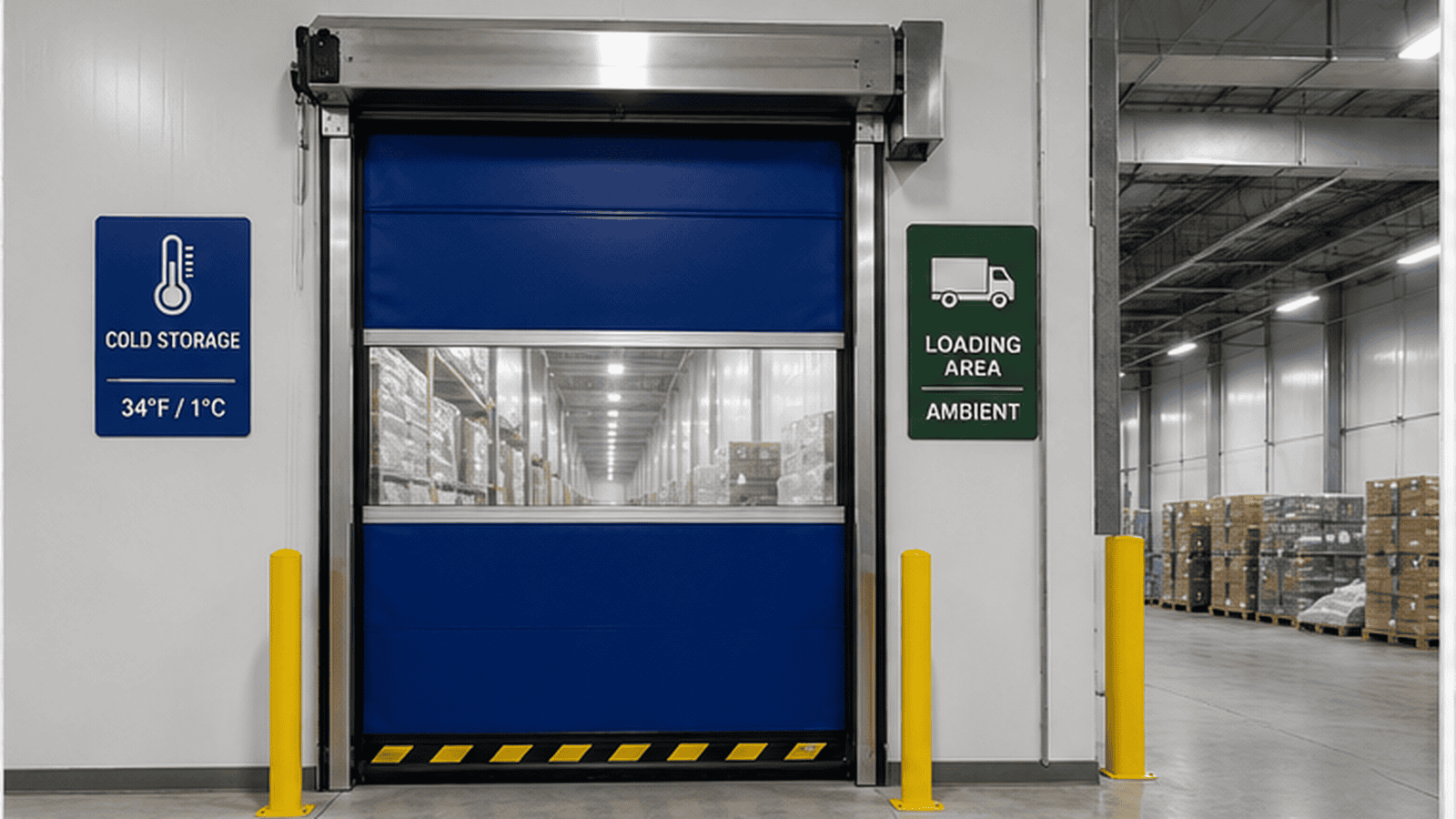
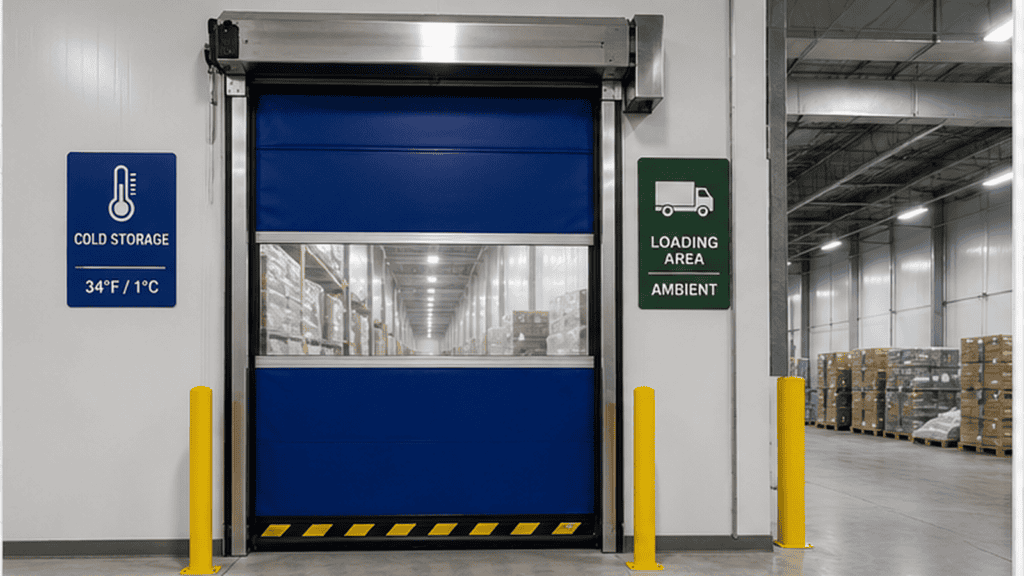
In Lebensmittel- und Getränkebetrieben sind Schnelllauftore dort am wertvollsten, wo der Verkehr häufig ist und die Umgebungstrennung wichtig ist. Dies kann Durchgänge zwischen Produktion und Lager, Kühl- und Umgebungszonen, Rein- und allgemeinen Lagerbereichen oder Gabelstaplerstrecken umfassen, die während der gesamten Schicht in Betrieb sind.
Der Nutzen liegt nicht einfach in der Geschwindigkeit an sich. Ein schnelleres Tor kann die Öffnungszeit verkürzen, die Temperaturstabilität unterstützen, die Staubbewegung begrenzen und die Wartezeit für Gabelstapler oder Palettenhubwagen verringern. In Anlagen, in denen das Tor hunderte Male pro Tag öffnet, werden diese kleinen Sekunden Teil des Arbeitsablaufs.
Käufer sollten nicht davon ausgehen, dass jede Öffnung ein Schnelllauftor benötigt. Der bessere Ansatz ist, die Anlage zu kartieren:
- Welche Öffnungen sind dem äußeren Ladebereich zugewandt?
- Welche Öffnungen teilen interne Temperaturzonen?
- Welche Tore haben die höchste tägliche Zyklenzahl?
- Welche Routen werden von Gabelstaplern, Palettenhubwagen, Fußgängern oder gemischtem Verkehr genutzt?
- Welche Bereiche erfordern eine bessere Abdichtung, Sichtbarkeit oder Stoßfestigkeit?
- Welche Tore benötigen eine Notöffnungs- oder Handauslöseplanung?
Äußere Ladepositionen werden möglicherweise immer noch besser durch isolierte Sektionaltore mit Rampenausrüstung bedient. Schnelllauftore könnten die bessere Wahl für interne Durchgänge, kontrollierte Zonen und hochfrequente Industrierouten sein. Die richtige Antwort hängt von Verkehr, Temperatur, Hygienevorstellungen, Sicherheit und Wartungsfähigkeit ab.
Vorbeugende Wartung wird Teil des Türkaufs
Der Betrieb von Lebensmittel- und Getränkeanlagen ist empfindlich gegenüber Ausfallzeiten. Ein defektes Andocktor kann eingehende Materialien verzögern. Ein beschädigtes Schnelllauftor kann interne Bewegungen stören. Eine schwache Abdichtung kann die Temperaturkontrolle erschweren. Ein schlecht gewarteter Antrieb kann Sicherheitsbedenken hervorrufen oder den Rampenplan verlangsamen.
Aus diesem Grund sind die jüngsten Aktivitäten im Servicemarkt relevant. Am 14. Juli 2026 kündigte Vortex Doors ein neues Servicecenter in New Orleans an, das Reparaturen von gewerblichen Türen, Service für Laderampenausrüstung, Reparatur von Automatiktüren, Brandschutztürinspektionen, Sicherheitstore und vorbeugende Wartungsprogramme beschreibt. Am selben Tag kündigte Vortex auch eine Expansion an der Central Coast Kaliforniens an, die Branchen wie Landwirtschaft, Weinbau, Lebensmittelverarbeitung, Fertigung und Distribution bedient.
Diese Ankündigungen sind unternehmensspezifisch, weisen aber auf eine breitere Beschaffungsrealität hin. Käufer erwarten zunehmend, dass Türsysteme wartbar, inspizierbar und nach der Installation unterstützt werden. Für Lebensmittel- und Getränkebetriebe sollte die vorbeugende Wartung besprochen werden, bevor das Türpaket bestellt wird, nicht nach dem ersten Ausfall.
Eine wartungsfreundliche Spezifikation sollte Folgendes berücksichtigen:
- Erwartete tägliche oder jährliche Türzyklen
- Zugang für Inspektion und Wartung
- Wartungspunkte für Antrieb, Feder, Rolle, Laufschiene, Dichtung und Sensor
- Verfügbarkeit von Verschleißteilen
- Diagnose des Bedienfelds, sofern zutreffend
- Klare Handbücher, Schaltpläne und Wartungsanleitungen
- Schulung für lokale Installateure, Händler oder Anlagenteams
Das Ziel ist nicht, jeden Käufer zum Ingenieur zu machen. Das Ziel ist es, vermeidbare Ausfallzeiten zu verhindern, indem ein Türpaket ausgewählt wird, das in der realen Anlagenumgebung gewartet werden kann.
Spezifikations-Checkliste für Türen in Lebensmittel- und Getränkebetrieben
Vor der Anforderung eines Angebots sollten Käufer eine Tür- und Rampenkurzbeschreibung erstellen, die die Öffnung mit dem Arbeitsablauf der Anlage verbindet. Die folgende Checkliste hilft, eine allgemeine Anfrage in eine fundiertere technische Diskussion zu verwandeln.
1. Definieren Sie den Anlagenbereich
Wird die Öffnung für den Wareneingang, Versand, die Produktion, Verpackung, Kühllagerung, Trockenlagerung, Abfallentsorgung oder den internen Transport genutzt? Dasselbe Gebäude benötigt möglicherweise mehrere Türtypen.
2. Bestätigen Sie die Verkehrsfrequenz
Schätzen Sie tägliche Zyklen, Spitzenbetriebszeiten, Gabelstaplerverkehr, Fußgängernutzung, Lkw-Fahrpläne und ob die Tür nach jedem Durchgang automatisch schließen muss.
3. Identifizieren Sie Temperatur- und Hygieneanforderungen
Klären Sie, ob der Bereich umgebungstemperiert, gekühlt, gefroren, feuchtigkeitsempfindlich, staubempfindlich oder angrenzend an einen Reinraum ist. Dies beeinflusst Isolierung, Abdichtung, Türgeschwindigkeit und Materialauswahl.
4. Passen Sie die Tür an die Öffnung an
Externe Laderampen erfordern oft industrielle Sektionaltore mit Andockvorrichtungen und Nivellierern. Interne Hochfrequenzstrecken können je nach Geschwindigkeit, Aufprallrisiko, Isolierung und Öffnungsgröße Schnelllauf-Rolltore, Reißverschlusstüren oder Spiraltore erfordern.
5. Planen Sie die Rampenschnittstelle
Bestätigen Sie Lkw-Typ, Rampenhöhe, Fahrzeuganfahrt, Nivellierergröße, Andockvorrichtungstyp, Anhängervarianten, Entwässerung, Puffer, Rückhaltesysteme und Sicherheitsmarkierungen.
6. Überprüfen Sie Steuerungen und Sicherheitsvorrichtungen
Fragen Sie nach Bedienfeldern, Drucktastern, Zugseilen, Radarsensoren, Schleifendetektoren, Lichtschranken, Sicherheitskanten, Warnleuchten, Not-Aus, manueller Auslösung und Verhalten bei Stromausfall.
7. Fordern Sie Dokumentation an
Fordern Sie Produktspezifikationen, Installationszeichnungen, Handbücher, Schaltpläne, Wartungsanleitungen, Verpackungsdetails sowie relevante Konformitäts- oder Prüfdokumente für den Zielmarkt an.
8. Besprechen Sie die Wartung vor dem Kauf
Die Lebenszykluskosten einer Tür hängen von Zuverlässigkeit, Servicezugang, Ersatzteilen und lokaler Wartungskapazität ab. Ein niedrigerer Anschaffungspreis kann teuer werden, wenn das System schwer zu reparieren oder schlecht dokumentiert ist.
Wo SEPPES-Produkte ansetzen
SEPPES kann Projekte für Türen in Lebensmittel- und Getränkebetrieben unterstützen, indem es Käufern hilft, das Produktpaket an die tatsächliche Anwendung anzupassen. Für ausländische Händler, Auftragnehmer und Projektbesitzer sind mehrere Produktrichtungen besonders relevant:
- Industrie-Sektionaltore: Geeignet für externe Ladebuchten, Lageröffnungen und Industrieanlagen, die einen stabilen vertikalen Betrieb, Isolierungsoptionen und Kompatibilität mit Rampenausrüstung benötigen.
- Schnelllauf-Rolltore: Nützlich für häufigen internen Verkehr, Lagerdurchgänge, Temperaturzonentrennung und schnell bewegte Produktions- oder Logistikbereiche.
- Schnelllauf-Reißverschlusstüren: Nützlich, wenn flexible Aufprallwiederherstellung, Abdichtung und reduzierte Ausfallzeiten wichtig sind.
- Schnelllauf-Spiraltore: Geeignet für größere, anspruchsvollere oder leistungsstärkere Industrieöffnungen, bei denen Geschwindigkeit, Steifigkeit und Isolierung von Bedeutung sein können.
- Andockvorrichtungen und Andockdichtungen: Werden um Lkw-Öffnungen herum verwendet, um Witterungseinflüsse und unerwünschten Luftaustausch zu reduzieren.
- Rampennivellierer und Laderampenausrüstung: Helfen, den Gebäudeboden mit Anhängern unterschiedlicher Höhe zu verbinden und unterstützen sicherere Ladevorgänge.
- Torantriebe und Steuerungssysteme: Sollten zusammen mit Türgröße, Gewicht, Verkehr, Spannung, Sicherheitsvorrichtungen und Wartungsanforderungen überprüft werden.
Fazit: Lebensmittelbetriebe benötigen Türen, die den Betrieb unterstützen
Das aktuelle Marktsignal ist nicht, dass jedes Lebensmittel- und Getränkeprojekt die gleiche Tür benötigt. Das Signal ist, dass Lebensmittel- und Getränkebetriebe in Infrastruktur investieren, bei der Türen, Rampenausrüstung, HLK, Sicherheit, Schutz und Wartung zusammenwirken.
Für Käufer ändert dies das Kaufgespräch. Die richtigen Türen für Lebensmittel- und Getränkebetriebe sollten helfen, die Exposition an Ladebuchten zu kontrollieren, temperaturempfindliche Arbeitsabläufe zu unterstützen, unnötige Öffnungszeiten zu reduzieren, die Betriebszeit zu schützen und Wartungsteams einen klareren Serviceweg zu geben.
Für SEPPES Garage-Kunden besteht die Möglichkeit, Industrietore als Teil des Anlagen-Workflows zu spezifizieren. Ein stärkeres Torpaket umfasst nicht nur das Paneel. Es umfasst die Öffnung, Fahrzeugschnittstelle, Steuerungen, Abdichtung, Sicherheit, Dokumentation und After-Sales-Planung, die das System nach der Installation funktionsfähig machen.
FAQ
Was sind Türen für Lebensmittel- und Getränkebetriebe?
Türen für Lebensmittel- und Getränkebetriebe sind Industrietore, die in Verarbeitungsbetrieben, Lagern, Kühlräumen, Verpackungsbereichen, Laderampen und Verteilzentren verwendet werden. Sie können je nach Anlagenbereich isolierte Sektionaltore, Schnelllauftore, Kühlraumtore, Rampentore und spezielle Zugangssysteme umfassen.
Welche Tür ist am besten für eine Lebensmittel- und Getränke-Laderampe geeignet?
Viele externe Lebensmittel- und Getränke-Laderampen verwenden isolierte industrielle Sektionaltore zusammen mit Andockvorrichtungen, Andockdichtungen, Rampennivellierern, Sicherheitsvorrichtungen und geeigneten Antrieben. Die endgültige Wahl hängt von Öffnungsgröße, Lkw-Typ, Temperaturkontrolle, örtlichen Vorschriften und Verkehrsfrequenz ab.
Wann sollte ein Lebensmittelbetrieb Schnelllauftore verwenden?
Schnelllauftore sind nützlich, wo Öffnungen häufig zyklieren oder wo Temperaturtrennung, Staubkontrolle, Arbeitsgeschwindigkeit oder interne Zonentrennung wichtig sind. Sie werden oft zwischen Produktions-, Verpackungs-, Lager-, Kühl- und allgemeinen Verkehrsbereichen eingesetzt.
Reduzieren isolierte Tore die Energiekosten im Lager?
Isolierte Tore, geeignete Dichtungen, Andockvorrichtungen und schnelleres Schließen können helfen, unerwünschten Luftaustausch und Wärmeübertragung zu reduzieren. Sie sollten zusammen mit HLK, Kühlung, Gebäudehülle und Betriebspraktiken geplant werden. Das genaue Energieergebnis hängt von der Anlage ab.
Was sollten Käufer in eine Ausschreibung für Türen in Lebensmittelbetrieben aufnehmen?
Eine gute Ausschreibung sollte Öffnungsgröße, Standort, Türtyp, Verkehrsfrequenz, Temperaturanforderungen, Hygieneerwartungen, Lkw- und Rampendetails, Sicherheitsvorrichtungen, Steuerungsmethode, Spannung, Dokumentationsanforderungen, Wartungserwartungen und Projektzeitplan enthalten.
Warum ist vorbeugende Wartung für Türen in Lebensmittel- und Getränkebetrieben wichtig?
Lebensmittel- und Getränkebetriebe sind auf zuverlässige Wareneingangs-, Versand-, Produktions- und Lagerabläufe angewiesen. Vorbeugende Wartung hilft, unerwartete Ausfallzeiten zu reduzieren, unterstützt die Sicherheit, verlängert die Lebensdauer der Ausrüstung und hilft der Anlage, kritische Öffnungen während der Betriebszeiten verfügbar zu halten.
Empfohlene interne Links
- Industrielles Sektionaltor
- Hochgeschwindigkeitstor
- Hochgeschwindigkeits-Rolltor
- Andockvorrichtung und Andockdichtung
- Hydraulischer Ladedocknivellierer
- Kontakt / Projektberatungsseite
Externe Quellen
- Send2Press / Industrial SalesLeads, “New Food and Beverage Industry Planned Projects Rebounds in June 2026 Up 15-percent with 59 New Projects,” veröffentlicht am 14. Juli 2026.
- Aircon Group, “Warehouse Air Conditioning Installation: Complete Buyer Guide,” veröffentlicht am 14. Juli 2026.
- GlobeNewswire / Vortex Industries, “Vortex Doors Expands Gulf Coast Operations with New Service Center in New Orleans, Louisiana,” veröffentlicht am 14. Juli 2026.
- GlobeNewswire / Vortex Industries, “Expansion of Door Services to Serve Central Coast Businesses,” veröffentlicht am 14. Juli 2026.
- International Door Association, “Fall EduCon Education and Training,” Veröffentlichungsdatum nicht bestätigt.