Gudang otomatis dirancang untuk memindahkan material secara cepat, akurat, dan berkelanjutan. Sistem konveyor, stasiun transfer palet, rak penyimpanan, peralatan pengangkat, dan sistem kendali bekerja sama untuk menjaga kelancaran aliran barang. Namun, lingkungan penanganan material yang sangat terotomatisasi juga menimbulkan pertanyaan desain yang kritis: bagaimana fasilitas dapat menjaga pemisahan personel yang aman tanpa memperlambat akses, inspeksi, dan pekerjaan pemeliharaan?
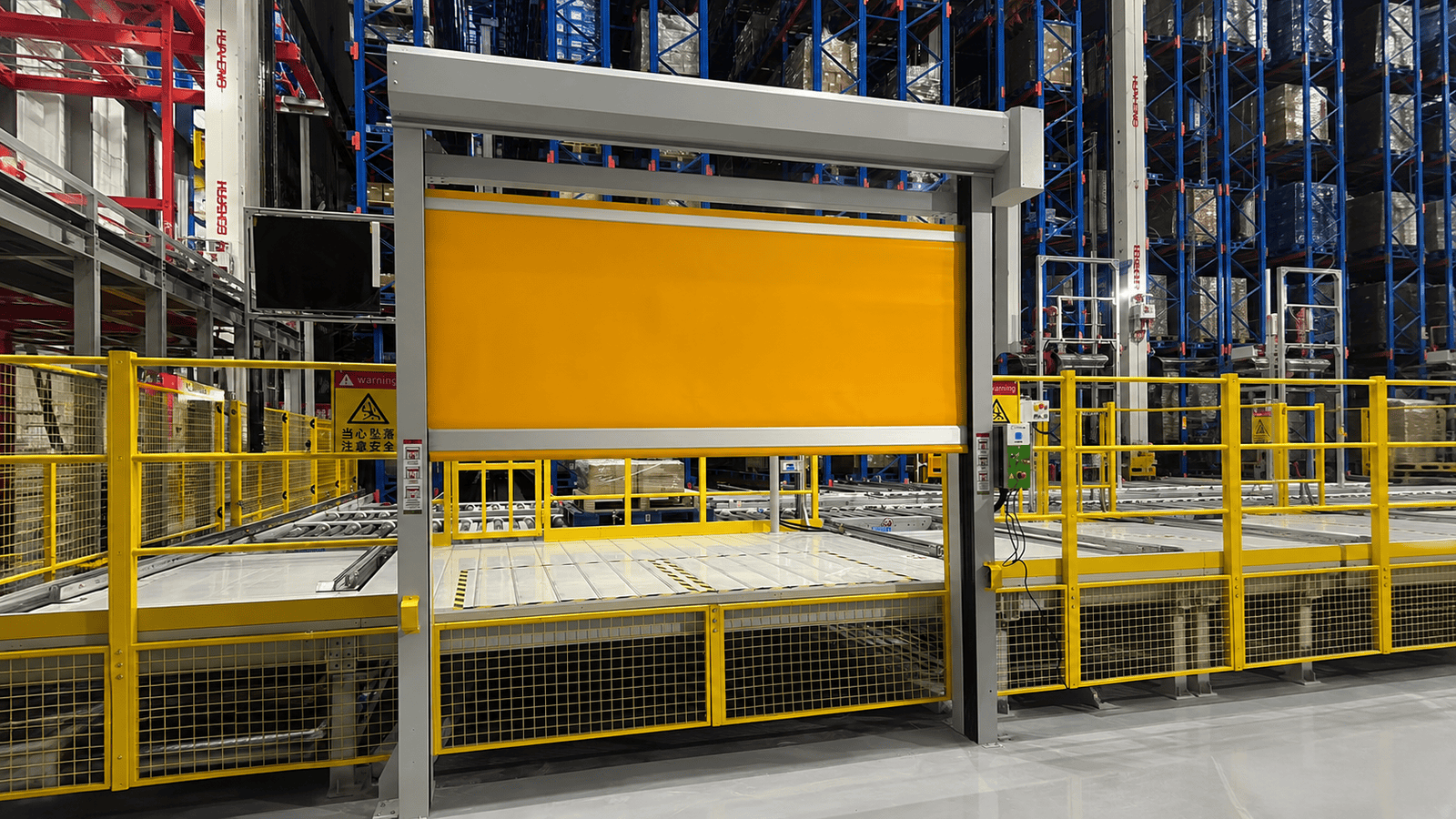
Proyek ini menunjukkan bagaimana sebuah Pintu berkecepatan tinggi untuk keselamatan jalur konveyor dapat digunakan sebagai bagian dari sistem pembatas keselamatan gudang. Pemasangan dilakukan untuk lingkungan logistik otomatis di Kunshan, Tiongkok. Untuk menghormati kerahasiaan proyek, pengguna akhir dan mitra proyek tidak disebutkan namanya dalam artikel ini.
Aplikasi ini melibatkan bukaan keselamatan di antara pagar pengaman jalur konveyor. Tujuan utamanya sederhana namun penting: mencegah personel memasuki atau jatuh ke area konveyor yang beroperasi, sambil tetap memungkinkan akses terkendali ketika pekerjaan yang berwenang diperlukan.
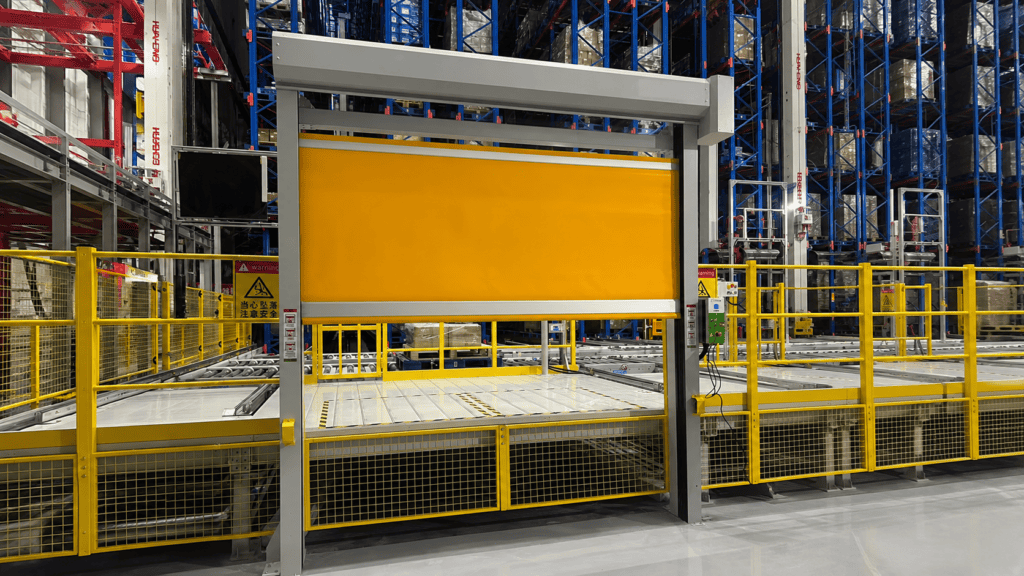
Alih-alih memperlakukan bukaan tersebut sebagai lorong sederhana, tim proyek memperlakukannya sebagai antarmuka keselamatan antara manusia dan otomatisasi. Hasilnya adalah pintu berkecepatan tinggi PVC kuning yang dipasang khusus dengan rangka penyangga baja, dirancang sesuai dengan kondisi aktual di lokasi.
Pintu berkecepatan tinggi keselamatan jalur konveyor ini dikonfigurasi sebagai titik akses terkendali dalam sistem pengamanan gudang.
Ikhtisar Proyek Singkat
| Item | Detail Proyek |
|---|---|
| Aplikasi | Bukaan pembatas keselamatan jalur konveyor |
| Jenis Fasilitas | Gudang otomatis / area penanganan material |
| Tujuan Keselamatan Utama | Membantu mencegah akses personel yang tidak berwenang dan risiko jatuh di sekitar peralatan konveyor |
| 门类型 | Pintu gulung cepat PVC / pintu berkecepatan tinggi |
| Ukuran Bukaan Bersih | 2660 mm × 2800 mm |
| Warna Pintu | Kuning |
| Tantangan Pemasangan | Kondisi lokasi yang ada tidak menyediakan struktur pemasangan yang sesuai |
| Solusi Kustom | Rangka penyangga baja persegi yang diproduksi di pabrik |
Apa Itu Pintu Berkecepatan Tinggi Keselamatan Jalur Konveyor?
Pintu berkecepatan tinggi keselamatan jalur konveyor adalah pembatas industri bukaan vertikal yang dirancang untuk membantu mengendalikan akses yang berwenang ke area konveyor yang diamankan. Pintu ini menggabungkan tirai PVC yang terlihat, gerakan vertikal yang ringkas, dan opsi kendali yang dapat dikonfigurasi untuk lingkungan gudang otomatis.
Mengapa Bukaan Jalur Konveyor Membutuhkan Lebih dari Sekadar Pagar Tetap
Di gudang otomatis, pagar pengaman dan pagar jaring sangat penting untuk memisahkan jalur pejalan kaki dari peralatan yang beroperasi. Namun, pembatas yang sepenuhnya tetap tidak selalu praktis. Tim pemeliharaan mungkin memerlukan akses sementara untuk inspeksi, pembersihan, pemecahan masalah, penyesuaian, atau servis peralatan.
Hal ini menciptakan keseimbangan yang sulit:
- Area tersebut harus tetap terlindungi selama operasi normal.
- Personel yang berwenang memerlukan akses terkendali ketika prosedur membutuhkannya.
- Pembatas harus terintegrasi dengan tata letak yang ada daripada menciptakan hambatan baru.
- Solusi harus dapat dikenali secara visual sebagai batas keselamatan.
- Bukaan tidak boleh mengompromikan logika perlindungan keseluruhan dari jalur konveyor.
Pintu ayun dasar dapat menyediakan batas fisik, tetapi dapat memakan ruang lantai, menciptakan titik tabrakan, atau dibiarkan terbuka tanpa sengaja. Pembatas yang dioperasikan secara manual juga dapat terlalu bergantung pada perilaku operator.
A Pintu berkecepatan tinggi untuk keselamatan jalur konveyor menyediakan opsi lain. Saat tertutup, ia membentuk pemisahan visual dan fisik yang jelas. Saat akses diperlukan, ia dapat terbuka secara vertikal tanpa memakan ruang lorong. Ini membuatnya sangat cocok untuk lokasi di mana ruang setingkat lantai dan rute pejalan kaki harus tetap bersih.
Masalah Keselamatan di Gudang Otomatis Ini
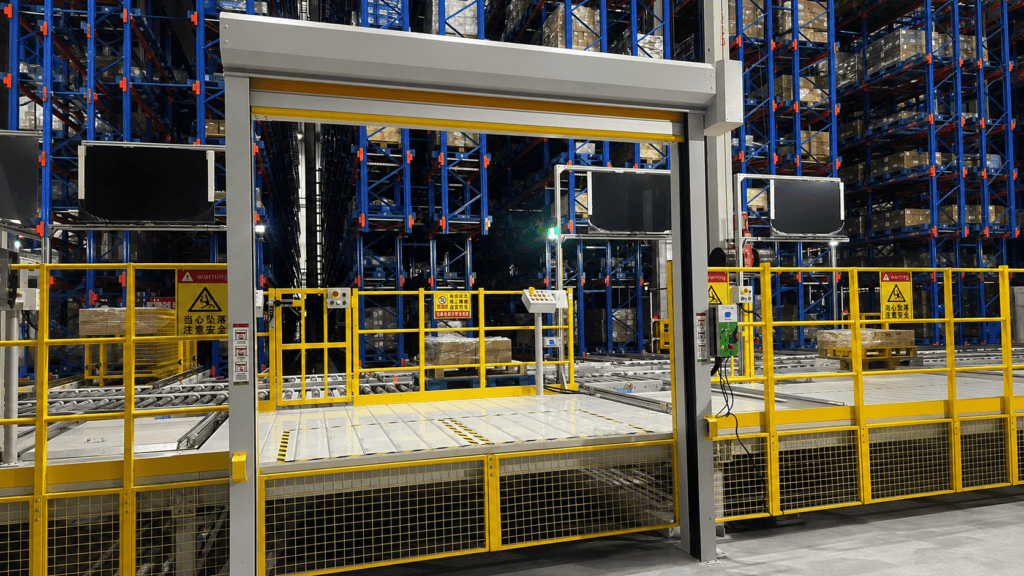
Lokasi proyek berada di antara pagar pengaman keselamatan jalur konveyor di area otomatisasi gudang. Sistem konveyor terletak di belakang pagar pelindung kuning, sementara bukaan akses menghubungkan zona yang dilindungi ke area kerja di sekitarnya.
Tanpa pintu khusus, jenis bukaan ini dapat menimbulkan beberapa risiko:
- Masuknya personel ke zona konveyor yang aktif
Karyawan, kontraktor, atau pengunjung dapat memasuki area yang hanya dimaksudkan untuk pekerjaan yang berwenang. - Risiko jatuh di sekitar peralatan yang ditinggikan atau bergerak
Area konveyor dapat mencakup transisi, rol, mekanisme transfer, dan perubahan level. Bukaan keselamatan harus membantu mencegah akses yang tidak disengaja di dekat bahaya ini. - Pemisahan visual yang lemah
Lorong terbuka sederhana tidak menyampaikan pesan keselamatan yang sama seperti pembatas yang didefinisikan dengan jelas. - Kontinuitas perlindungan yang terputus
Bahkan pagar yang dirancang dengan baik kehilangan sebagian nilainya ketika satu bukaan tidak dilindungi dengan solusi akses yang setara. - Ketidaknyamanan operasional
Jika peralatan akses sulit digunakan, tim mungkin tergoda untuk mengabaikan prosedur atau membiarkannya terbuka selama bekerja.
Oleh karena itu, tujuan proyek bukan sekadar memasang pintu industri. Tujuannya adalah untuk menjaga kontinuitas penutup keselamatan konveyor sambil mempertahankan akses terkendali yang praktis.
Mengapa Pintu Berkecepatan Tinggi PVC Dipilih
Pintu gulung cepat PVC banyak digunakan di pabrik, gudang, bengkel bersih, dan titik akses industri internal. Pintu ini menggabungkan tirai fleksibel dengan bukaan vertikal cepat, operasi ringkas, dan perangkat keselamatan opsional.
Untuk fasilitas dengan ruang lorong terbatas, pintu berkecepatan tinggi keselamatan jalur konveyor dapat menyediakan alternatif yang lebih ringkas dibandingkan pintu ayun sambil mempertahankan batas akses yang jelas.
Untuk aplikasi keselamatan konveyor ini, pintu berkecepatan tinggi PVC menawarkan beberapa keuntungan praktis.
1. Bukaan vertikal menghemat ruang lantai yang berharga
Tidak seperti pintu ayun, pintu gulung vertikal tidak memerlukan daun pintu untuk berayun ke jalur pejalan kaki atau area kerja. Ini berguna di fasilitas logistik di mana denah lantai mencakup konveyor, stasiun operator, palet, kereta, dan rute pemeliharaan.
2. Batas keselamatan yang jelas dan sangat terlihat
Tirai kuning memberikan kontras visual yang kuat dengan lingkungan gudang di sekitarnya. Dalam desain keselamatan industri, visibilitas itu penting. Pembatas yang dapat diidentifikasi dengan jelas membantu pekerja mengenali batas antara zona yang dapat diakses pejalan kaki dan zona yang dilindungi peralatan.
Bagian tampilan transparan juga mendukung kesadaran visual. Personel dapat mengamati area di balik pintu tanpa membukanya, yang dapat membantu meningkatkan kesadaran situasional sebelum akses diminta.
3. Akses cepat saat pekerjaan diotorisasi
Tujuan pintu bukan untuk menciptakan penundaan yang tidak perlu. Pintu berkecepatan tinggi dapat menyediakan bukaan vertikal cepat saat akses diperlukan, kemudian mengembalikan bukaan ke kondisi terlindungi setelah digunakan.
Pintu berkecepatan tinggi SEPPES PVC tersedia dengan opsi kendali yang berbeda, termasuk tombol tekan, sensor radar, kendali jarak jauh, sakelar tarik, deteksi loop, dan tautan PLC atau otomatisasi. Metode aktivasi yang tepat harus dipilih sesuai dengan penilaian risiko dan prosedur akses di lokasi.
4. Konfigurasi fleksibel untuk lingkungan industri
Pintu berkecepatan tinggi bukanlah produk yang cocok untuk semua situasi. Ukuran pintu, warna tirai, jendela transparan, material rangka, motor, perangkat keselamatan, dan metode pembukaan semuanya dapat dikonfigurasi sesuai dengan lingkungan pemasangan yang sebenarnya.
Untuk proyek ini, bukaan yang diperlukan adalah 2660 mm lebar kali 2800 mm tinggi. Pintu dirancang agar sesuai dengan bukaan tersebut serta pengaturan pagar pengaman di sekitarnya.
Tantangan Utama: Tidak Ada Struktur Pemasangan yang Sesuai di Lokasi
Detail teknik terpenting dalam proyek ini bukanlah tirai pintu itu sendiri, melainkan kondisi pemasangannya.
Lokasi yang ada tidak dapat menyediakan struktur yang sesuai untuk pemasangan pintu secara langsung. Ini adalah masalah umum dalam proyek retrofit. Pagar, konveyor, kolom bangunan, baki kabel, dan tata letak peralatan yang sudah ada mungkin tidak selaras dengan persyaratan struktural pintu cepat.
Jika rangka pintu dipasang pada permukaan yang tidak sesuai, hasilnya dapat memengaruhi keselarasan, stabilitas, pergerakan tirai, dan pengoperasian jangka panjang. Pemasangan yang tepat membutuhkan lebih dari sekadar menemukan dua titik tempat rel pemandu dapat dipasang.
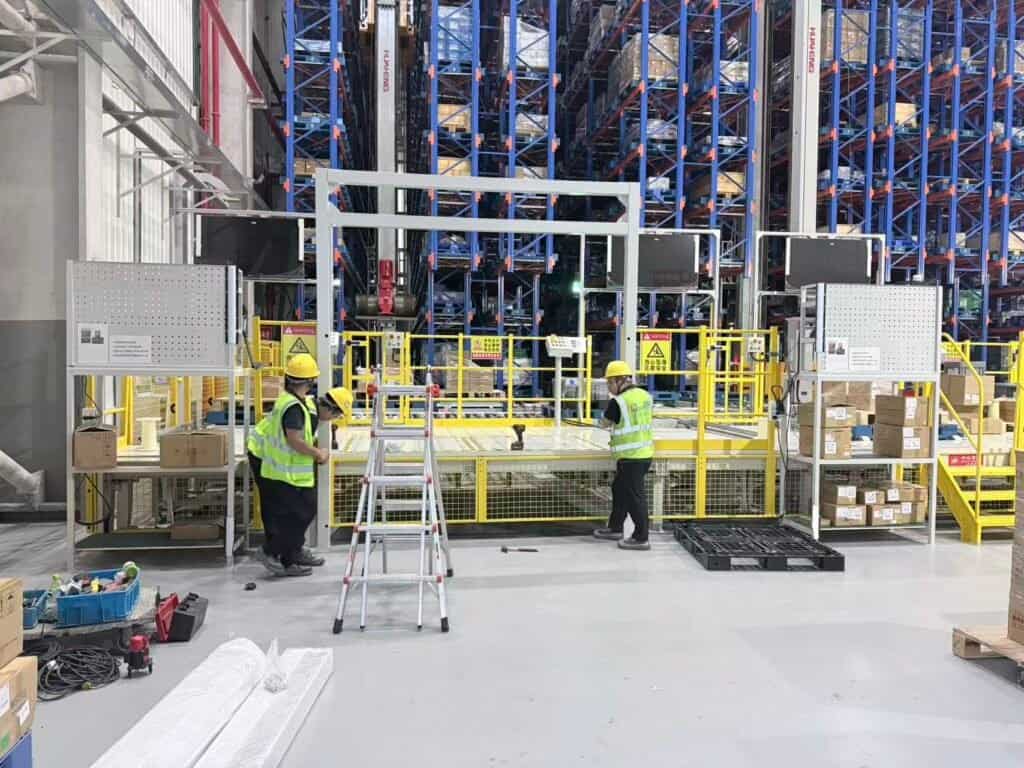
Untuk mengatasi masalah ini, rangka penyangga baja persegi khusus dibuat sebelum pemasangan.
Mengapa Rangka Penyangga Baja Khusus Itu Penting
Rangka penyangga yang dibuat menciptakan struktur pemasangan yang stabil dan mandiri untuk pintu berkecepatan tinggi. Hal ini memberikan antarmuka pemasangan yang terkendali bagi tim proyek meskipun struktur lokasi sekitarnya tidak dirancang khusus untuk produk ini.
Rangka penyangga baja yang dirancang dengan baik dapat membantu mencapai:
- Permukaan pemasangan yang rata dan tegak lurus untuk rel pemandu
- Dukungan yang stabil untuk struktur bagian atas dan sisi motor
- Penjangkaran yang andal, tidak bergantung pada panel pagar ringan
- Keselarasan yang akurat antara pintu dan bukaan yang dilindungi
- Integrasi yang lebih rapi antara pintu, lantai, dan penghalang keselamatan
- Kontrol kualitas pemasangan yang lebih baik dalam kondisi retrofit
Ini adalah pelajaran penting untuk proyek retrofit keselamatan gudang: pemilihan pintu dan struktur pendukung harus dievaluasi bersama.
Dalam proyek retrofit, struktur pendukung seringkali sama pentingnya dengan pintu berkecepatan tinggi keselamatan jalur konveyor itu sendiri karena keselarasan yang benar memengaruhi pengoperasian jangka panjang yang andal.
Pintu berkecepatan tinggi mungkin secara teknis sesuai untuk aplikasi tersebut, tetapi kinerjanya bergantung pada fondasi pemasangan yang baik. Jika bangunan atau pagar tidak dapat menyediakan fondasi tersebut, rangka baja yang dibuat khusus dapat menjadi bagian dari solusi.
Logika Desain Langkah-demi-Langkah untuk Proyek Pintu Keselamatan Konveyor
Saat menentukan spesifikasi pintu berkecepatan tinggi keselamatan jalur konveyor, fasilitas harus mengevaluasi lebih dari sekadar lebar dan tinggi bukaan. Proses desain berikut adalah titik awal yang praktis.
Langkah 1: Tentukan risiko dan prosedur pengoperasian
Pertama, identifikasi mengapa bukaan itu ada dan siapa yang perlu menggunakannya.
Pertanyaan yang perlu dipertimbangkan meliputi:
- Apakah bukaan hanya untuk akses pemeliharaan?
- Apakah akses pejalan kaki rutin diperlukan?
- Akankah konveyor dihentikan sebelum masuk?
- Apakah akses dikendalikan oleh supervisor, sakelar kunci, atau prosedur keselamatan?
- Apakah pintu perlu berkomunikasi dengan sistem kontrol konveyor?
- Apa yang terjadi jika pintu tetap terbuka?
Pintu harus mendukung proses keselamatan fasilitas, bukan menggantikannya. Pintu cepat adalah penghalang akses fisik; desain keselamatan secara keseluruhan tetap harus mencakup prosedur, rambu, pelatihan, dan kontrol keselamatan mesin yang sesuai.
Untuk panduan umum, tinjau persyaratan pengamanan mesin OSHA, yang menjelaskan peran pengaman dalam melindungi pekerja dari bahaya mesin yang bergerak.
Untuk pertimbangan keselamatan terkait konveyor, lihat panduan OSHA tentang pengamanan konveyor dan perlindungan karyawan. Peraturan setempat dan penilaian risiko khusus lokasi harus selalu menentukan desain keselamatan akhir.
Langkah 2: Ukur amplop pemasangan yang sebenarnya
Jangan hanya mengukur bukaan bersih. Pastikan ruang samping yang tersedia, ruang kepala, kondisi lantai, peralatan di dekatnya, geometri pagar, dan lokasi jalur kabel.
Untuk lokasi retrofit, perlu juga diperiksa apakah struktur yang ada dapat menopang pintu. Jika tidak, rencanakan rangka baja terpisah atau sistem pemasangan sejak awal.
Langkah 3: Pilih desain tirai dan visibilitas
Tirai PVC berwarna memberikan pemisahan visual yang jelas. Jendela transparan dapat meningkatkan visibilitas melintasi penghalang, tetapi ukuran dan lokasi panel penglihatan harus ditentukan sesuai dengan tata letak lokasi dan kebutuhan operasional.
Untuk kasus ini, tirai kuning menciptakan batas keselamatan yang sangat mudah dikenali sementara bagian transparan memungkinkan pengamatan visual terhadap zona yang dilindungi.
Langkah 4: Pilih perangkat akses dan keselamatan
Kontrol pintu harus sesuai dengan skenario penggunaan yang sebenarnya. Tergantung pada lokasinya, opsi dapat mencakup:
- Kontrol tombol tekan manual
- Tekan kendali jarak jauh untuk membuka pintu.
- Aktivasi sakelar tarik
- Deteksi radar atau gerakan
- Deteksi kendaraan loop atau geomagnetik
- Tautan PLC
- Integrasi kontrol akses
- Sensor keselamatan fotolistrik
Untuk aplikasi perlindungan personel, sensor keselamatan dan logika pembukaan memerlukan evaluasi yang cermat. Pembukaan otomatis tidak boleh pernah menciptakan akses yang tidak terkendali ke area berbahaya.
Langkah 5: Koordinasikan perilaku pintu dengan zona peralatan
Jika sesuai, pintu dapat dianggap sebagai bagian dari urutan otomatisasi atau kontrol akses yang lebih luas. Misalnya, fasilitas mungkin memerlukan area konveyor dalam keadaan aman sebelum akses yang berwenang diizinkan.
Logika yang tepat harus dirancang dan divalidasi oleh tim keselamatan dan otomatisasi yang bertanggung jawab di fasilitas. Pemasok pintu berkecepatan tinggi dapat menyediakan opsi kontrol yang kompatibel, tetapi fungsi keselamatan akhir harus didasarkan pada penilaian risiko proyek dan persyaratan setempat.
Apa yang Diungkapkan Kasus Ini Tentang Keselamatan Gudang Modern
Proyek ini mencerminkan tren industri yang lebih luas. Keselamatan gudang tidak lagi terbatas pada penambahan pagar di sekitar peralatan yang bergerak. Fasilitas manufaktur dan logistik modern membutuhkan penghalang yang bekerja dengan otomatisasi, bukan melawannya.
Tiga wawasan praktis menonjol.
Penghalang keselamatan harus dirancang berdasarkan alur kerja yang sebenarnya
Penghalang yang menghalangi akses pemeliharaan akan menciptakan jalan pintas. Penghalang yang terlalu mudah dilewati tidak akan memberikan perlindungan yang cukup. Pendekatan yang paling efektif adalah merancang akses berdasarkan alur kerja aktual, proses otorisasi, dan tingkat bahaya.
Kondisi retrofit sering kali menentukan solusi akhir.
Dalam konstruksi baru, bukaan pintu dan penyangga dapat direncanakan ke dalam desain bangunan. Di fasilitas yang sudah ada, tantangannya berbeda. Keterbatasan ruang, pagar pengaman yang sudah ada, dan titik pemasangan yang tidak sesuai dapat memerlukan rekayasa khusus.
Inilah mengapa survei lokasi sangat penting sebelum memilih pintu berkecepatan tinggi untuk proyek keselamatan konveyor.
Visibilitas dan kontrol akses sama-sama penting.
Keselamatan tidak dicapai hanya dengan menutup suatu area. Pekerja juga perlu memahami apa yang ada di balik pembatas dan bagaimana cara mengaksesnya. Pintu berkecepatan tinggi yang terlihat, panel transparan, rambu peringatan, kontrol yang sesuai, dan prosedur operasi bekerja sama untuk menciptakan antarmuka keselamatan yang lebih jelas.
Mengapa Memilih SEPPES untuk Proyek Pintu Berkecepatan Tinggi Kustom?
SEPPES memasok pintu berkecepatan tinggi dan solusi akses masuk industri khusus untuk pabrik, gudang, ruang bersih, fasilitas logistik, dan lingkungan produksi otomatis.
Untuk aplikasi Pintu kecepatan tinggi PVC industri, SEPPES dapat mendukung kustomisasi:
- Dimensi bukaan pintu
- Warna tirai dan jendela transparan
- Opsi rangka baja dicat, baja tahan karat, atau aluminium
- Kontrol tombol tekan, radar, jarak jauh, sakelar tarik, loop, atau terhubung PLC
- Perlindungan keselamatan fotolistrik
- Solusi rangka penyangga khusus untuk lokasi retrofit yang sulit
- Pengemasan, pengiriman, panduan instalasi, dan dukungan purna jual
Pintu berkecepatan tinggi SEPPES dirancang untuk lingkungan industri yang memerlukan akses cepat, pemisahan, kesadaran keselamatan, dan arus lalu lintas yang efisien. Untuk aplikasi jalur konveyor, konfigurasi yang benar harus selalu ditentukan setelah meninjau prosedur akses, tata letak peralatan, kondisi struktural, dan persyaratan keselamatan lokasi.
Pertanyaan yang Sering Diajukan
Apa itu pintu berkecepatan tinggi keselamatan jalur konveyor?
Pintu berkecepatan tinggi keselamatan jalur konveyor adalah pintu industri cepat yang dipasang di bukaan yang dijaga di sekitar peralatan konveyor. Ini membantu menciptakan penghalang fisik terkendali antara area personel dan zona konveyor sambil memungkinkan akses yang sah saat diperlukan. Pintu harus dipilih sebagai bagian dari strategi pengamanan yang lebih luas yang mencakup penilaian risiko, kontrol yang sesuai, rambu peringatan, pelatihan, dan prosedur perawatan.
Dapatkah pintu berkecepatan tinggi dipasang di pagar pengaman yang sudah ada?
Ya, tetapi pagar yang sudah ada harus dinilai terlebih dahulu. Jika tidak dapat memberikan dukungan pemasangan yang memadai, rangka penyangga baja khusus mungkin diperlukan. Dalam proyek ini, rangka baja persegi dibuat karena lokasi tidak memiliki kondisi pemasangan langsung yang sesuai.
Berapa ukuran pintu berkecepatan tinggi dalam proyek ini?
Ukuran bukaan bersih adalah lebar 2660 mm dan tinggi 2800 mm.
Mengapa menggunakan tirai PVC kuning untuk aplikasi keselamatan?
Warna kuning memberikan kontras visual yang kuat di banyak lingkungan industri. Ini membantu membuat titik akses dan batas keselamatan lebih mudah dikenali. Jendela transparan juga dapat ditambahkan untuk mendukung visibilitas melintasi penghalang.
Dapatkah pintu dihubungkan dengan peralatan konveyor?
Pintu berkecepatan tinggi dapat dikonfigurasi dengan koneksi PLC dan opsi kontrol lainnya. Namun, setiap penguncian atau urutan keselamatan antara pintu dan sistem konveyor harus dirancang, diimplementasikan, dan divalidasi oleh personel otomasi dan keselamatan yang berkualifikasi berdasarkan penilaian risiko fasilitas.
Apakah pintu berkecepatan tinggi merupakan pengganti pelindung mesin?
Tidak. Pintu berkecepatan tinggi dapat menjadi bagian dari solusi kontrol akses atau perlindungan perimeter, tetapi tidak menggantikan penilaian keselamatan mesin yang lengkap, desain pelindung yang sesuai, kontrol keselamatan, prosedur operasi, atau pelatihan personel.
Minta Solusi Pintu Keselamatan Konveyor Kustom
Jika gudang, pabrik, atau jalur produksi otomatis Anda memiliki bukaan konveyor yang tidak terlindungi, titik akses pagar pengaman yang tidak sesuai, atau ruang instalasi terbatas, SEPPES dapat membantu mengevaluasi solusi pintu PVC berkecepatan tinggi khusus.
Kirimkan kepada kami ukuran bukaan Anda, foto area instalasi, persyaratan operasi, dan metode kontrol yang diinginkan. Tim kami dapat merekomendasikan konfigurasi pintu dan solusi rangka penyangga yang sesuai untuk proyek Anda.
Hubungi SEPPES untuk mendiskusikan pintu berkecepatan tinggi keselamatan jalur konveyor khusus untuk tata letak gudang Anda, persyaratan perlindungan konveyor, dan kondisi instalasi lokasi.