Dock Levelers at Logistics Terminals: Equipment and Workflow Planning
At a logistics terminal, a dock leveler provides a physical transition between the loading dock and a suitable vehicle. It is one component of the bay, alongside the door, vehicle positioning arrangements and other specified equipment.
Use the SEPPES DL-220 hydraulic dock leveler as the main product reference. Terminal scheduling and cargo tracking are separate system functions unless an explicitly specified integration provides them.
Keep Equipment Functions Separate from Software Functions
A hydraulic platform should not be described as inherently identifying cargo, optimizing dispatch schedules or performing artificial-intelligence analysis. Those functions belong to a separately defined warehouse, terminal or integration system.
If monitoring or coordinated controls are required, specify the inputs, outputs, interface ownership and intended use of the information. Do not assume a standard leveler includes a software platform simply because the wider terminal uses one.

Define the Actual Transfer Operation
Describe the loading dock, vehicles, handling equipment, loads and expected traffic. A truck-loading leveler should not be treated as a general solution for every port or vessel transfer.
Record where goods wait, how vehicles are positioned, and which personnel authorize the loading operation. Use the actual movement through the bay to identify equipment requirements.
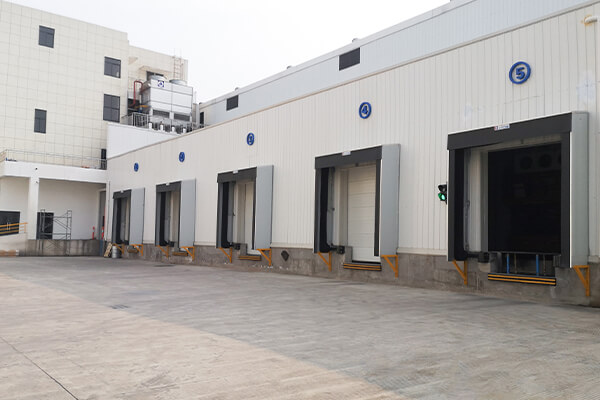
Coordinate the Bay Components
- Door opening and required access configuration.
- Dock leveler geometry and rating for the intended handling operation.
- Vehicle positioning and the specified restraint arrangements.
- Seals or shelters where required by the environment.
- Control responsibilities, signals and the agreed operating sequence.
The industrial sectional door and leveler are separate selections. Their compatibility should be reviewed in the project layout rather than assumed from their individual descriptions.
Use Measurements and Records for the Project Brief
Provide dock height, vehicle-bed height range, equipment and load details, operating conditions and installation-space measurements. Distinguish the product dimensions from the building opening or pit.
See the dock leveler sizing guide and the warehouse loading-dock planning article for related information.
Agree What Will Be Delivered
List the selected equipment, drawings, control interfaces, operating documents and handover responsibilities. Evaluate throughput or software results using site data and a defined measurement method, rather than attributing them automatically to a platform.
Send SEPPES the terminal loading-bay brief to review the proposed equipment configuration.
Related posts

Dock Leveler Sizing Guide: Distinguishing Between Product Size and Mounting Pit Size
Dock Leveler Sizing Guide: Distinguishing Between Product Size and Mounting Pit Size Efficient and safe loading and unloa …
Read more
Inflatable Dock Shelter: An Innovative Solution to Improve Logistics Efficiency
The Inflatable Dock Shelter is an innovative logistics device designed to improve efficiency and safety during cargo han …
Read more