Loading Dock Door Safety and Warehouse Efficiency: What Recent Logistics Projects Reveal
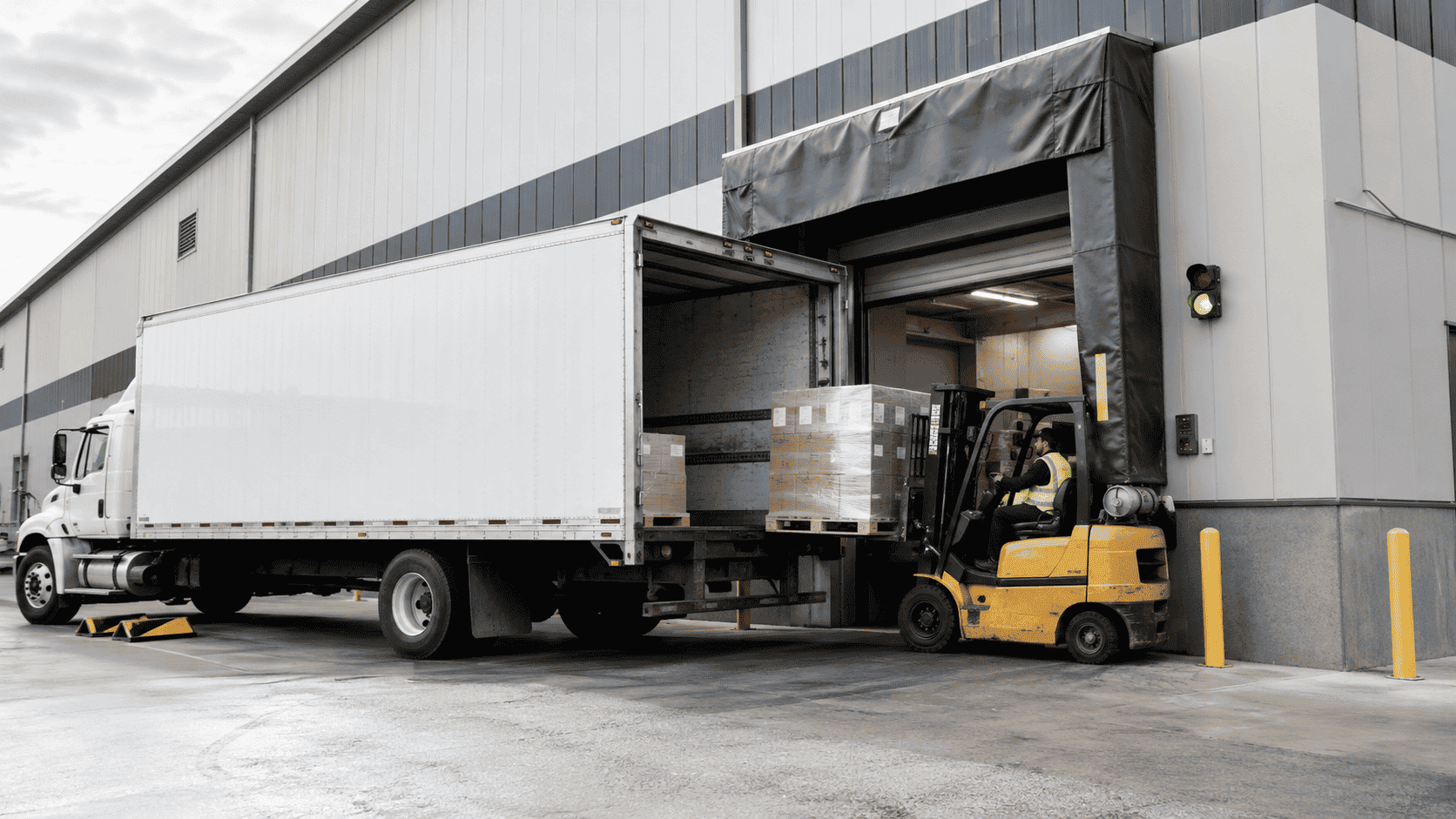
In modern logistics facilities, the loading dock is no longer treated as a simple truck access point. It is one of the busiest and most risk-sensitive areas of the building, where vehicles, forklifts, workers, goods, and temperature control systems all meet.
Recent industry updates from North America show a clear direction: warehouse developers and operators are paying closer attention to dock door capacity, loading safety, energy efficiency, and automated access. For buyers of industrial doors, this means the right door system is now closely linked to daily productivity and long-term building performance.
Why Loading Dock Safety Is Getting More Attention
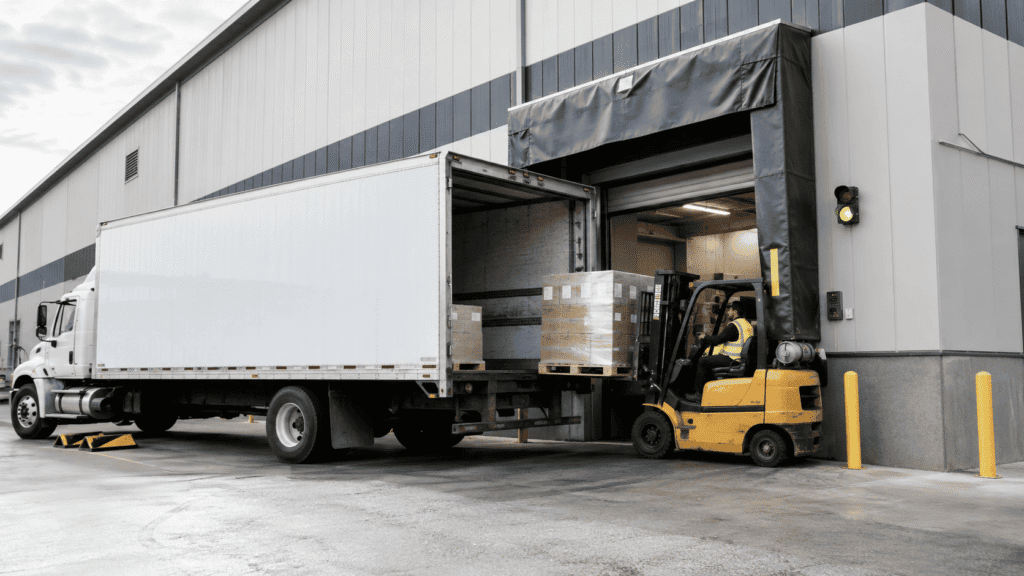
A recent article from ISHN discussed the risks of trailer creep and unsafe loading dock movement. These problems may sound operational, but they often connect directly to the way a dock area is designed and equipped.
When a trailer shifts during loading, or when dock equipment is not properly coordinated, the result can be serious: damaged goods, worker injuries, vehicle delays, and unexpected downtime. In busy distribution centers, even small interruptions at the dock can affect the entire logistics chain.
This is why more facility managers are looking beyond a single door product. A safer loading area often depends on how the dock door works together with dock levelers, vehicle restraints, seals, shelters, warning lights, and control systems.
For overseas buyers and contractors, the key takeaway is simple: loading dock doors should be selected according to real operating conditions, not only opening size.
Warehouse Projects Continue to Highlight Dock Door Capacity
Industrial real estate news also shows how important dock access has become in logistics projects.
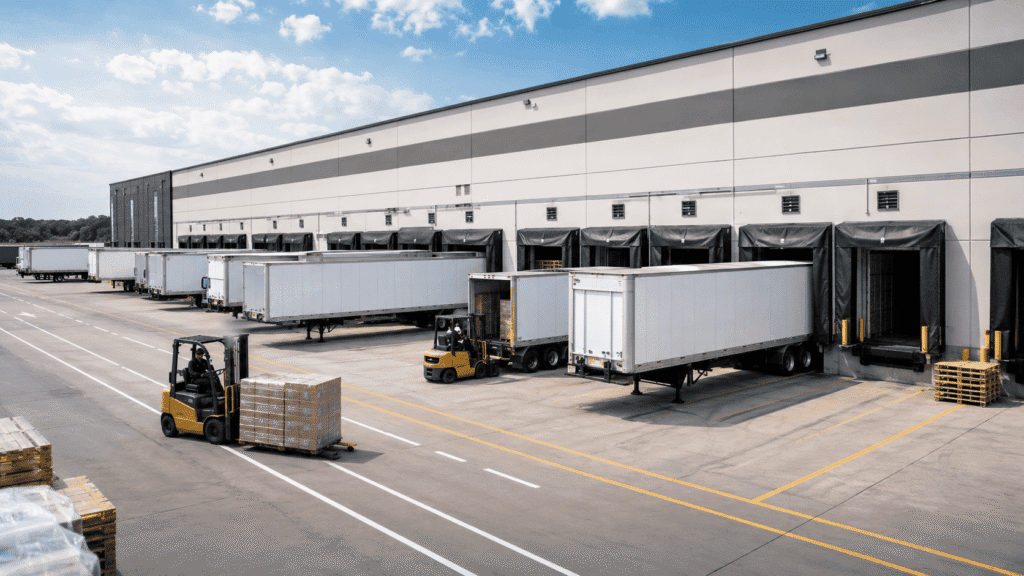
JLL recently reported the sale of Northwest Spur Industrial Park in Houston, a large industrial property with more than one million square feet of space and 216 dock doors. In New Jersey, Real Estate NJ reported a planned Prologis warehouse with 34 dock doors and two drive-in doors. Another report from REBusinessOnline noted that a newly completed Staten Island warehouse includes 60 dock doors, 36-foot clear height, rooftop solar, and modern fire protection systems.
These projects are not door product announcements, but they reveal something useful for the industrial door market. High-quality warehouses are being designed around faster loading, better truck access, and smoother goods movement. Dock doors are part of that value.
For developers, distributors, and logistics operators, door performance can influence how quickly trucks are served, how safely forklifts move, and how reliably the building operates during peak periods.
Energy Efficiency Starts at the Opening
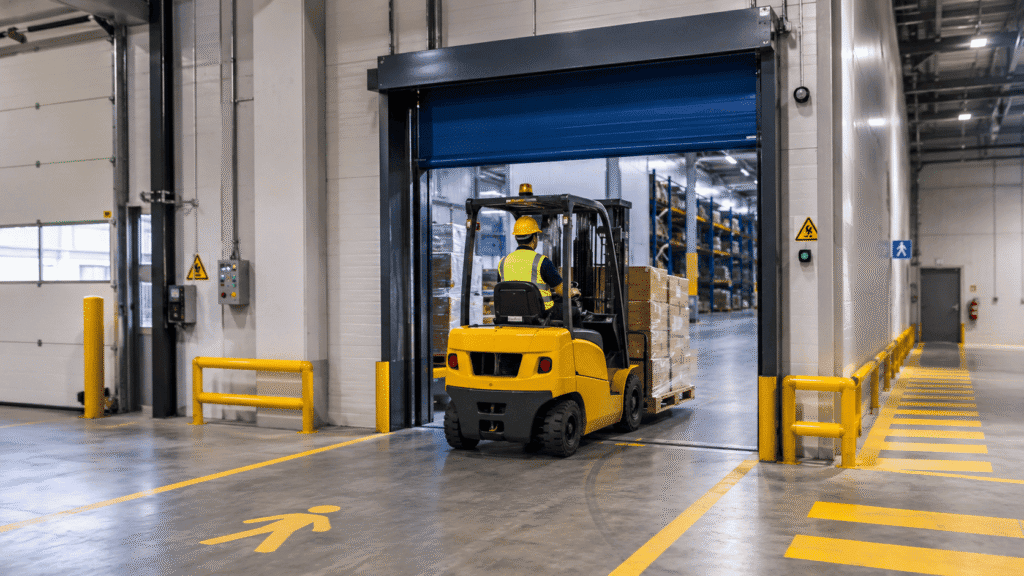
Every loading bay is also a potential energy loss point. Air can escape through poorly sealed doors, open dock areas, and slow-moving access points. This matters even more in cold storage, food processing, pharmaceutical logistics, and temperature-controlled warehouses.
A well-specified door system can help reduce heat transfer, dust, humidity, insects, and outside air entering the building. In many facilities, insulated sectional doors, high speed doors, and dock sealing systems work together to protect the indoor environment.
This is where buyers should think beyond the initial purchase price. A door with better sealing, insulation, and operating speed may help reduce long-term energy costs and improve working conditions inside the facility.
Automation Is Becoming Part of the Standard Conversation
Door automation is also becoming more important in both commercial and industrial applications. Smart openers, safety sensors, access controls, radar sensors, and remote operation features can help reduce manual handling and improve traffic flow.
In a home garage, automation often means convenience and security. In a warehouse, it means fewer delays, better control of access points, and safer movement between work zones.
For high-traffic areas, high speed doors are especially useful because they open and close quickly while helping separate different areas of the building. In busy logistics environments, this can reduce waiting time and help maintain a cleaner, more stable indoor space.
What Buyers Should Check Before Choosing a Dock Door System
Before purchasing loading dock doors or industrial sectional doors, buyers should review the project’s real usage pattern. Important questions include:
- How many trucks will use the dock each day?
- Is the area temperature controlled?
- Does the door need insulation or special sealing?
- Will forklifts or other vehicles pass through frequently?
- Are safety sensors or access control systems required?
- Is the door compatible with dock levelers, shelters, and vehicle restraints?
- How easy is maintenance and spare parts replacement?
The best solution is rarely the cheapest door on paper. For warehouses and industrial facilities, a reliable door system should support safety, efficiency, energy performance, and long-term maintenance.
What This Means for SEPPES Garage Door Customers
For B2B buyers, contractors, and distributors, recent logistics trends point to a growing need for complete industrial door solutions. A warehouse may require multiple types of doors: sectional overhead doors for loading bays, high speed doors for internal traffic, insulated doors for temperature-controlled areas, and dock equipment for safer loading operations.
SEPPES Garage provides door solutions for warehouses, logistics centers, factories, commercial buildings, and industrial projects. By matching the door type to the building’s operating environment, buyers can improve loading efficiency, reduce energy loss, and build a safer workplace.
As warehouse projects become larger and more demanding, the role of industrial doors will continue to expand. Loading dock doors are no longer just building components. They are part of how modern logistics facilities stay productive, safe, and efficient.
Sources
- Overcoming Trailer Creep Hazards Through Engineered Loading Dock Solutions
- JLL: Northwest Spur Industrial Park sale
- Real Estate NJ: Prologis warehouse project in Bergen County
- REBusinessOnline: Staten lsland warehouse completion
Buyer Questions About Loading Dock Doors
What are loading dock doors used for?
Loading dock doors are used in warehouses, factories, logistics centers, and distribution buildings to support truck loading, unloading, security, and environmental control.
Which door type is suitable for a busy warehouse?
For high-traffic warehouses, buyers often consider industrial sectional doors, high speed doors, insulated doors, or a combination of dock door systems depending on traffic flow and temperature requirements.
How can loading dock doors improve energy efficiency?
Properly sealed and insulated doors can reduce air leakage, temperature loss, dust, and humidity entering the building, especially in cold storage or climate-controlled facilities.
Why should buyers consider automation for industrial doors?
Automation can improve access control, reduce manual operation, support safer traffic movement, and help doors open and close faster in busy work areas.