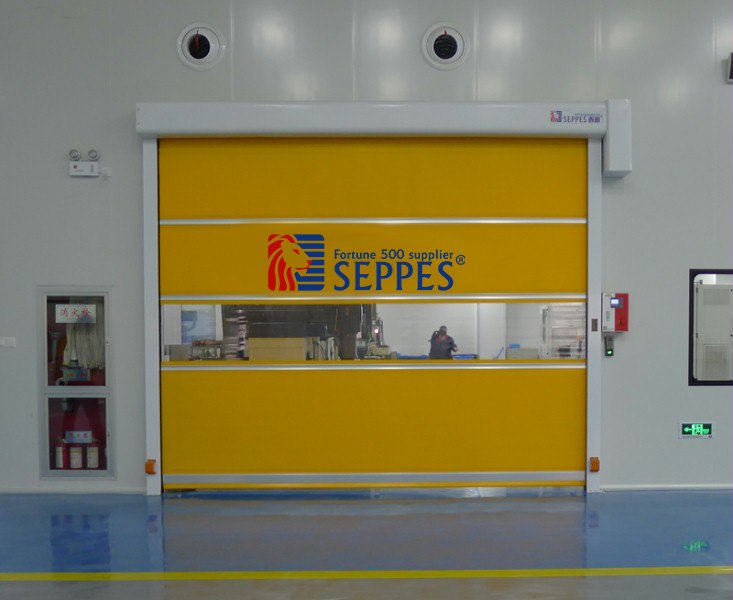
Rapid Door Curtain Out of Its Guides: What to Record Before Repair
A rapid door curtain outside its guides needs assessment of the door structure and the cause of the incident. A forklift impact, damaged guide, obstruction or unsuitable operating conditions may require different repairs. A curtain that appears undamaged does not establish that the complete door is ready for use.
This article helps a site team prepare a service report for a PVC high speed door. It does not provide a universal curtain reinsertion procedure.

Take the Door Out of Service
Keep people and vehicles away from the affected opening and report the fault through the site procedure. A qualified person should determine the required isolation and physical securing arrangements before inspection or repair.
Do not lift the curtain back into the guides, force the door through repeated cycles or bypass a protective device. Opening a control switch is not the same as controlling all electrical and stored mechanical energy.
Record the Incident Without Dismantling the Door
From a safe location, record the door identification and the sequence before the fault. Provide photographs only where they can be taken without entering the movement area.
- Which side left its guide and where the curtain stopped.
- Any vehicle contact, unusual wind, obstruction or abnormal sound.
- Visible curtain, guide, bottom-edge or frame damage.
- Controller model and the displayed fault message.
Identify the Curtain Retention System
Conventional guided curtains and self-repairing zipper designs do not use the same recovery method. Confirm the installed model, guide arrangement and manufacturer instructions before deciding whether a reset or component repair is appropriate.
If wind exposure contributed to the incident, review the opening size, building exposure and the specified door rating. Adding reinforcement or choosing a stacking-door configuration requires a project assessment.
Agree the Return-to-Service Checks
The service provider should confirm the repair scope, guide alignment, curtain retention and the required operational and protective-device checks. Record the result and the person authorizing the return to service.
Send the identification, incident description and available photographs to SEPPES for service review. Avoid choosing a replacement only from an assumed wind class.