Automation & Interlocking for Industrial Door Projects
Start with what must request the door, what must be confirmed before movement and which team owns the sequence. Use real project examples to compare door-to-door interlocking, future AGV connections and OEM controller interfaces.
- Beginnen Sie mit
- The operating sequence
- Coordinate
- Signals & responsibilities
- Plan
- Commissioning checks
- Retain
- Approved settings & drawings
Activation, coordination and protective functions are different requirements.
An automatically opening door may need only local activation, or it may be one element in a wider process. Identify that relationship first so the controls scope is neither assumed nor left between suppliers.
Describe Normal Operation
Identify the people, vehicles or equipment using the opening. Explain where an opening request comes from, when it should be accepted and what the operator or connected system needs to know before proceeding.
A short operating narrative often resolves more questions than a list of preferred sensors. Include a sketch showing the approach route and every connected opening.
Identify the Responsible Systems
Name the door controller, access system, vehicle controller or machine PLC involved. Agree which party owns the sequence and who supplies each connection.
If a protective function is required, have the responsible machine or facility team define its design and validation scope separately from the normal operating signals.
Match the brief to the interaction you actually need.
These categories can overlap, but they should not be treated as interchangeable product options. Write each required relationship explicitly before comparing quotations.
| Requirement | Typical discussion | What to put in the brief |
|---|---|---|
| Local activation | A push button, pull cord or sensor requests door operation. | User type, approach route, activation position and how unintended requests should be addressed. |
| Door-to-door interlocking | The opening relationship of two or more doors is coordinated. | Labelled openings, permitted combinations, waiting-door indication and the owner of the sequence. |
| AGV or vehicle integration | A vehicle system exchanges requests and status with the door. | Vehicle approach and stopping positions, signal definitions, permissions and integration-test responsibility. |
| OEM machine interfaces | Door commands and position information connect to the machine controller. | Mechanical layout, electrical characteristics, the operating narrative and separate machine-protection requirements. |
| Authorised access | An access-control system determines whether a request is permitted. | User authorisation, normal access method and approved responses to alarms or exceptional conditions. |
A useful interface list says more than “PLC compatible”.
The items below are examples for a new project brief. They are not a fixed terminal schedule or a claim that every door configuration provides the same signals.
| Example signal or item | Question to resolve | Information to agree |
|---|---|---|
| Open or close request | Which system issues the command? | Signal direction, electrical characteristics, terminal or network reference and responsible party. |
| Position confirmation | What does the receiving system need to confirm? | Meaning of the open and closed states, validity conditions and the response to a missing confirmation. |
| Unavailable or fault state | How will the connected system know that a normal request cannot be completed? | Which state is communicated, how it is acknowledged and who owns recovery logic. |
| Operating mode | What happens during approved local or service operation? | Mode ownership, permitted commands and the information shown to the operator. |
| Protective interfaces | Which functions belong to the machine or facility protection design? | Required components, design authority and validation plan rather than an assumed function of ordinary I/O. |
Use plain names that every supplier understands, then add the agreed electrical or protocol detail. Keep the final signal list aligned with the drawings and the operating narrative.
Three projects show different levels of coordination.
Follow the project that is closest to your operating problem. The cleanroom project used a door relationship, the textile project reserved later connections, and the OEM package coordinated equipment interfaces.

Three-Door Cleanroom Interlocking
Three 2,000 × 2,000 mm doors combined a compact internal-motor layout with door-to-door interlocking and status indication.
Review the door relationship and installation envelope together.
Read the Cleanroom Interlock Project →
Textile Corridor Opening Review
A 12-door package adopted 5,500 × 4,000 mm openings after reviewing the initial width proposal. Control terminals were reserved for later AGV connections.
Separate today’s door package from future integration work.
Read the Textile Corridor Project →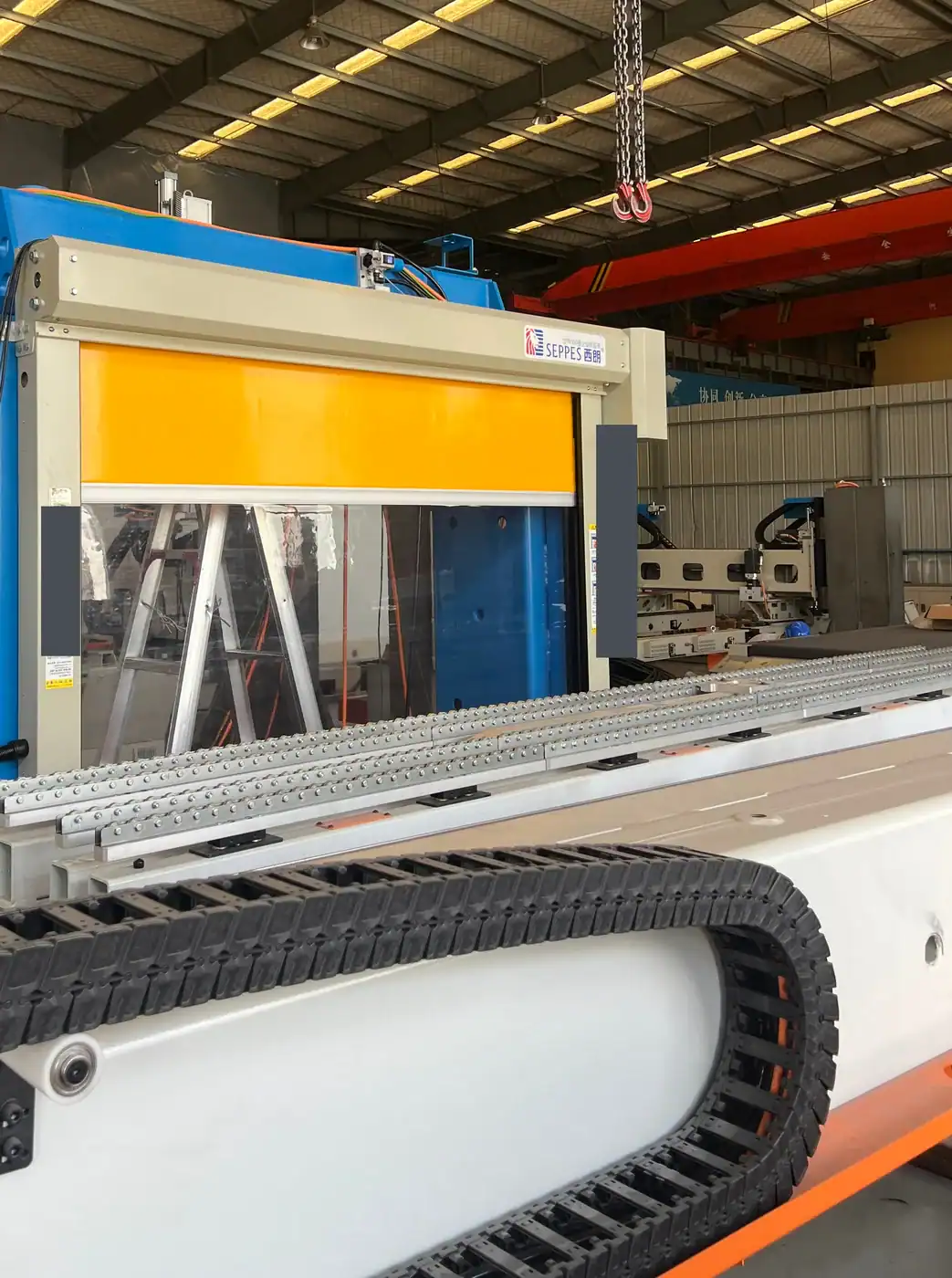
OEM Automotive Equipment Doors
Two equipment doors used mirrored motor positions, custom rear covers and command/position interfaces coordinated with the OEM controller.
Agree mechanical drawings and signal responsibilities before manufacture.
Read the OEM Equipment Door Project →Define the outcome outside the door package as well.
The reason for the opening determines which other disciplines need to participate. Define the door functions and the wider facility or machine requirements as related, but separately verifiable, items.
Cleanroom or Airlock Passage
An interlock controls the door-opening relationship. Review the room’s ventilation, pressure relationships and enclosure sealing with the facility designer when environmental performance is part of the brief.
ASHRAE’s clean-spaces guidance provides background on those wider design relationships.
Machine or Production-Line Access
A command or position output describes part of the process interface. It does not establish the performance of a complete protective system. The responsible machine team should define safeguarding and controls through its risk assessment.
HSE’s machinery-safety introduction explains the importance of considering safeguards with the complete machine.
Agree the work between the door and the connected system.
This is especially useful where the door, AGV, machine and electrical installation come from different suppliers. Make the boundaries reviewable before equipment is ordered.
| Work item | Agree with the project teams | Useful output |
|---|---|---|
| Sequence design | Who owns the normal sequence and exceptional-condition decisions? | An approved operating narrative with labelled systems. |
| Hardware and connections | Who supplies activation devices, interfaces, field wiring and network access? | A responsibility list and coordinated connection information. |
| Programming and integration | Who implements and checks the receiving system’s logic? | The agreed settings, software responsibility and change-control route. |
| Acceptance and handover | Who witnesses tests and accepts the complete relationship? | A test plan, results and the final drawing/settings revision. |
Where several equipment items are being supplied, review integrated door and dock package responsibilities.
Agree expected behaviour before the systems are connected.
These are commissioning-planning categories, not instructions to introduce faults or alter a working system. The responsible project teams should select and approve the actual tests.
| Condition to review | What the team should agree | What to retain at handover |
|---|---|---|
| Normal requests | The approved operating sequence for each approach or connected opening. | The witnessed check results and the configuration used. |
| An unmet permission | How a waiting or rejected request is handled and indicated. | The approved expected response and operator information. |
| Missing signal or interrupted supply | The behaviour required by the responsible controls design. | The test responsibility, approved response and recovery instructions. |
| Local operation, alarms or emergency conditions | Which modes and protective functions apply, with their design authority. | The approved test scope and related operating documentation. |
Send a layout and an operating narrative together.
Use the following checklist for a new project. A brief with named responsibilities is easier to turn into a complete proposal than a request for a generic “automatic door”.
Layout and Operating Information
- Label each opening and identify the areas or equipment it connects.
- Show users, vehicles, loads, approach routes and any waiting positions.
- Describe the normal request, permission and feedback relationship.
- Identify planned future connections separately from equipment being commissioned now.
Technical and Delivery Information
- Supply requirements and the proposed interface or protocol characteristics.
- The door, machine, vehicle and electrical contacts responsible for coordination.
- Required acceptance documents and the commissioning location.
- Site programme, installation scope and the settings/drawings needed at handover.
Prepare the opening and service information alongside the controls brief using the industrial door installation checklist.
Make the approved relationship understandable after commissioning.
A functioning connection is only part of a usable handover. The facility team also needs to know what was agreed and how a later change will be reviewed.
Keep a labelled system layout, final signal list, connection information, operating instructions and settings record together. Identify the service contact and who can authorise changes to the connected system.
If the process, vehicle route or number of doors changes later, return to the agreed operating narrative. Have the responsible teams review the effect on interfaces, exceptional conditions and any required protective functions.
Resolve the interface questions before ordering.
Are dry-contact terminals the same as a completed AGV integration?
No. Terminals can provide a connection point, but the signal meanings, operating permissions, vehicle route and integration tests still need agreement. The textile case illustrates provision for a future system rather than a completed AGV installation.
Does a closed-position output establish a safety-rated interlock?
No. It describes a functional state unless the complete protective design and its required performance have been specified and validated by the responsible team. Include that requirement explicitly in a machine project.
Can I copy a three-door relationship into another passage?
Use it as a discussion starting point, then check the new layout and process. The connected areas, waiting positions, alarms, emergency arrangements and control ownership may differ.
Which activation method should I choose?
Start with the user and route. A person carrying goods, a forklift and an AGV can need different request methods. Provide the approach layout so activation and detection can be reviewed around the actual movement.
What is the best first document to send?
Send a labelled layout with a short normal operating narrative. Add known interface requirements and name the team that owns the connected system. Those items give the review a clear starting point.
Define the door-control relationship for your project.
Send the passage or machine layout, proposed activation method, signal requirements and the parties responsible for integration. SEPPES can help review the door interfaces and the scope to include in the configuration proposal.