AGVs and Rapid Doors: A Warehouse Traffic Planning Guide
Adding an automated vehicle and a rapid door changes how traffic reaches, waits at and clears an opening. A useful warehouse plan considers that complete movement, including pedestrian routes, queued loads and recovery from interruptions.
This guide is for the facility team preparing the operating brief. Use the AGV-to-door communication article for the functional signal discussion and the PVC high speed door page for the door configuration.
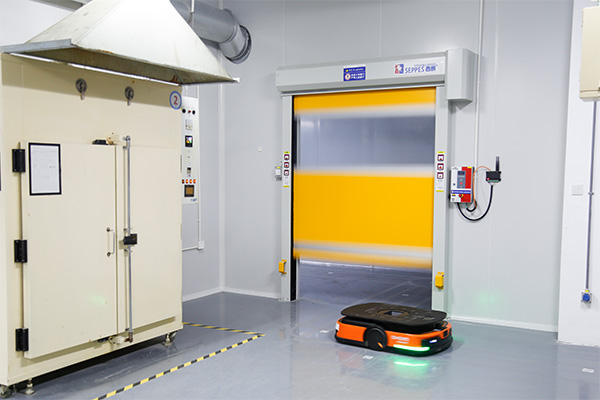
Map the Traffic Before Selecting Equipment
Identify each route through the opening and the purpose of the movement. Note vehicle dimensions with loads, approach direction, turning space, stopping positions and nearby pedestrian activity. Include manual vehicles and occasional oversized loads, not just the main AGV route.
Show where a vehicle can wait without blocking another process. A wider or faster door alone will not resolve a queue that is caused by product staging, cross traffic or unavailable space beyond the opening.
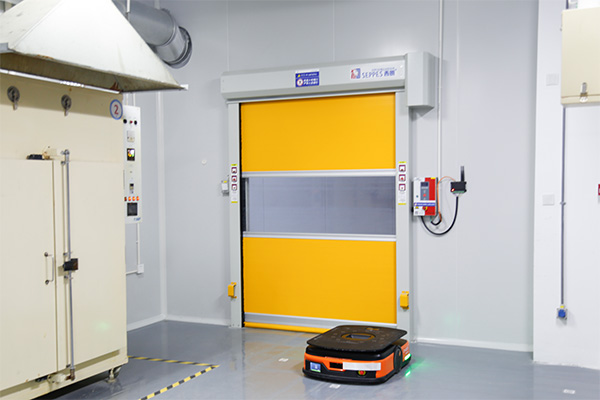
Allocate Responsibility for the Interface
Agree who supplies the control interface, who maintains the door and who owns the overall passage sequence. The AGV integrator and door supplier need compatible documents and a shared account of fault and restart behavior.
List the operating modes: automatic traffic, authorized manual use, cleaning, maintenance and recovery. Changes to one mode can affect other users of the opening, so include those users in the review.
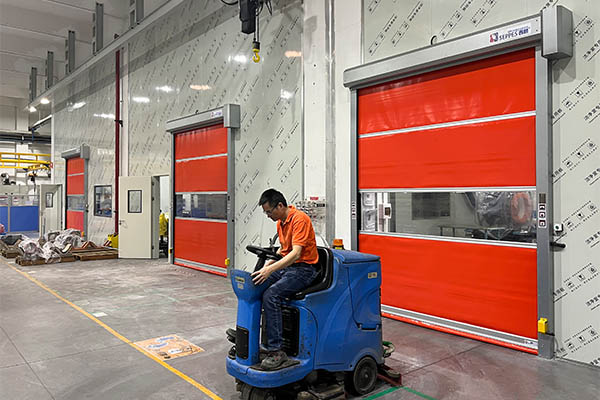
Make Environmental Requirements Specific
Explain what the opening separates: ordinary storage, a temperature-controlled zone or a production area with cleaning restrictions. Record the duration and frequency of openings and the surrounding operating conditions.
A door can be one part of controlling an opening, but a project energy or hygiene result depends on the complete building and process. Evaluate the selected configuration against the actual requirement rather than assuming a fixed saving or cleanliness result.
Plan a Staged Handover
- Review the route and interface documents before installation.
- Agree the equipment checks and integrated acceptance scenarios.
- Train the operators who use manual modes or respond to interruptions.
- Record the approved configuration, document versions and service contacts.
- Define how proposed changes to AGV routes or door controls are reviewed.
Any testing involving moving equipment needs an agreed method and suitable supervision. The installation documents determine the required checks for the delivered system.
Measure the Complete Passage
Compare waiting time at the opening, passage time, queue length, repeated requests and interruption frequency under similar operating conditions. Distinguish a door fault from a route, vehicle or downstream-process delay.
Use the site records to assess improvement. A throughput percentage from an unidentified project is not a forecast for another warehouse; the business case should show the starting conditions, scope and measurement period.
Prepare the Enquiry
Send the route plan, traffic mix, loaded vehicle envelope, environmental conditions and integration responsibilities. Add the information already available from the AGV supplier.
Request a project review from SEPPES with the brief. Where the same facility has truck loading bays, review the industrial sectional door and hydraulic dock leveler as separate equipment selections for those openings.
Related SEPPES project examples and engineering guides
Related posts

Rapid Door:Optimizing Space Efficiency with Room Dividers
In commercial and industrial environments, space management is critical. Traditional room dividers, such as walls and sl …
Read more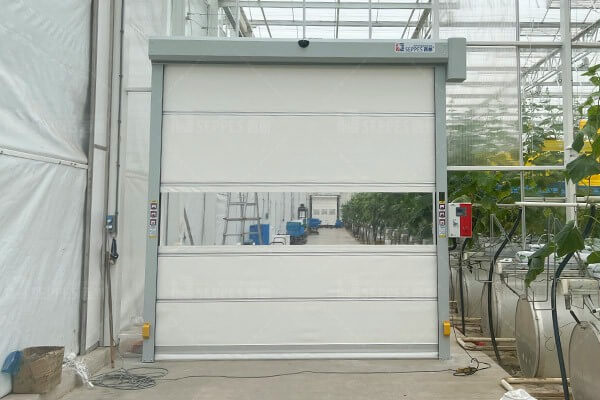
Optimize Your Greenhouse Efficiency with Rapid Roller Door
Greenhouses play an integral role in modern agriculture. It provides a controlled environment that promotes optimal plan …
Read more